
The e-commerce revolution in consumer healthcare is no longer a future trend — it is the present reality across the GCC. In Saudi Arabia alone, the online pharmacy and consumer healthcare market surpassed SAR 4.5 billion in 2025, with year-over-year growth exceeding 28%. The UAE, Kuwait, and Bahrain are following a similar trajectory. If you are a brand manager, commercial director, or distributor executive managing consumer healthcare products in this region and you have not built a serious e-commerce capability, you are already behind.
I have spent over 20 years in pharmaceutical and consumer healthcare marketing across the GCC, including building e-commerce channels for major pharma distributors. I have launched product listings on Amazon.sa, negotiated commission structures with Noon, set up D2C storefronts for dermocosmetic brands, and navigated the regulatory maze of SFDA’s e-pharmacy requirements. What follows is everything I have learned about winning online in this market — the strategic frameworks, the operational details, and the mistakes that cost real money.
This is not a theoretical overview. It is a practitioner’s guide built from years of managing real P&Ls, negotiating with real platforms, and solving real supply chain problems for health products sold online.
SAR 4.5B+
KSA online pharmacy & consumer healthcare market in 2025
28%
Year-over-year growth in GCC consumer healthcare e-commerce
10–20%
Typical marketplace commission on consumer healthcare GMV
4×
Conversion rate lift from A+ content vs. basic product listings
The GCC E-Commerce Boom for Consumer Healthcare
To understand where to invest, you need to understand the market dynamics driving this growth. The GCC healthcare e-commerce ecosystem has evolved dramatically since the COVID-19 pandemic accelerated digital adoption across the region. What began as a necessity has become a permanent behavioral shift.
Market Size and Growth Trajectory
The numbers are compelling. The broader MENA e-pharmacy market is projected to reach USD 2.8 billion by 2028, with the GCC accounting for roughly 65% of that total. Saudi Arabia is the anchor market, driven by Vision 2030’s digital health agenda, a young and tech-savvy population (70% under 35), and smartphone penetration exceeding 98%.
| Market Metric | 2023 | 2025 | 2028 (Projected) |
|---|---|---|---|
| GCC healthcare e-commerce (USD) | $1.1B | $1.8B | $2.8B |
| KSA online pharmacy market share | 6% | 12% | 20%+ |
| E-pharmacy order frequency (KSA, monthly) | 1.2x | 2.4x | 3.5x |
| Average basket size, CHC online (SAR) | 85 | 120 | 145 |
| Consumer healthcare share of total e-pharmacy GMV | 38% | 45% | 52% |
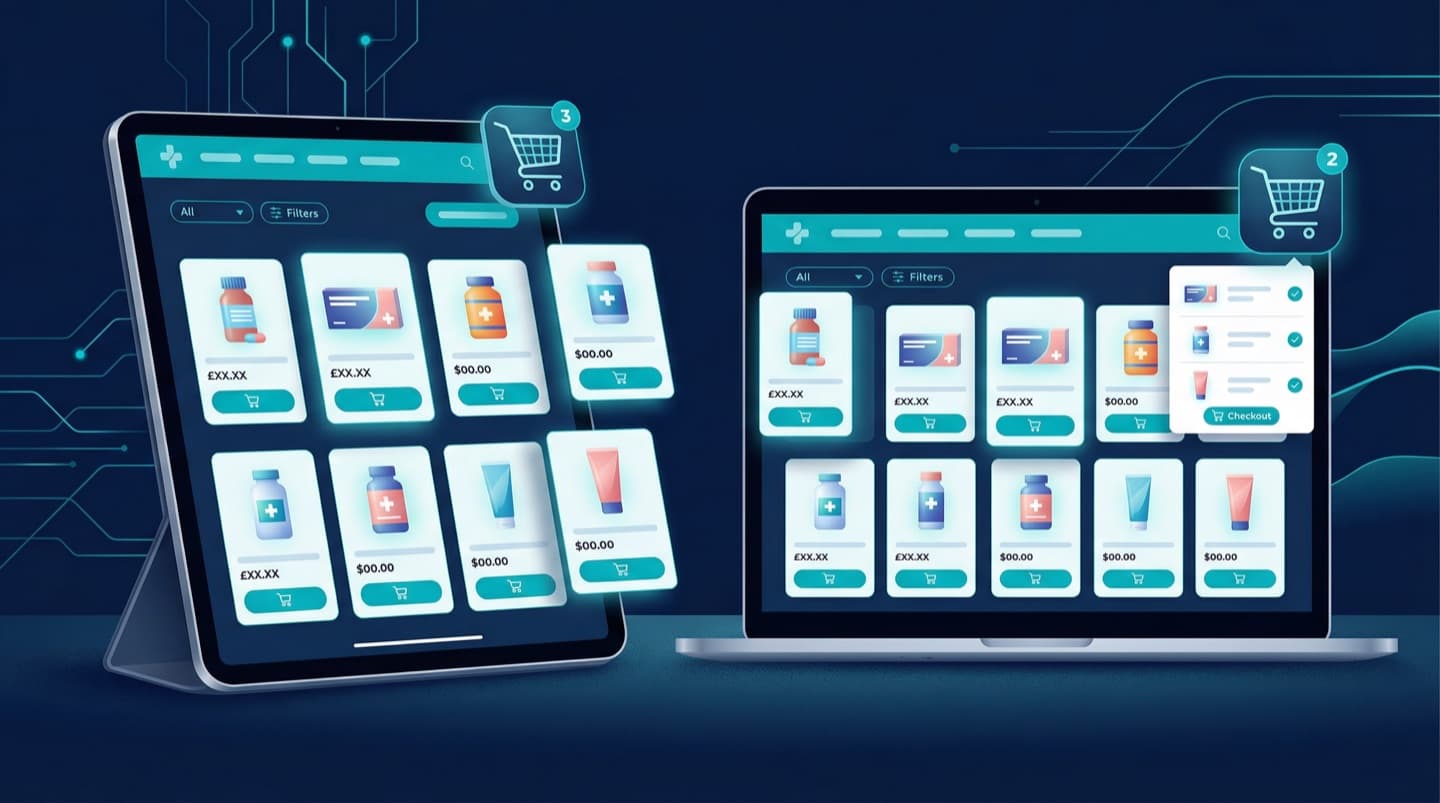
What makes this particularly interesting for consumer healthcare brands is the composition of online baskets. Unlike prescription medicines — which require more complex regulatory handling online — OTC products, vitamins, supplements, dermocosmetics, oral care, and personal health devices are the fastest-growing categories. They are impulse-friendly, subscription-suitable, and benefit enormously from the visual merchandising that e-commerce enables.
Actionable takeaway: If your consumer healthcare portfolio does not have a dedicated e-commerce growth plan for 2026, you are ceding a channel that will account for 20% or more of total CHC sales in KSA within two years. Start by auditing your current online presence across every major platform.
Platform Benchmark
E-Commerce Platform Suitability for Consumer Healthcare — GCC
Score out of 10 — based on healthcare suitability, consumer trust, logistics, and regulatory compliance readiness
The Platform Landscape: Where to Sell
The GCC e-commerce ecosystem for consumer healthcare is fragmented across horizontal marketplaces, specialized e-pharmacies, and retailer-owned platforms. Each has different commission structures, audience profiles, and operational requirements. Understanding this landscape is the first strategic decision you need to make.
Key Platforms in the GCC
| Platform | Type | Strengths | Commission Range | Best For |
|---|---|---|---|---|
| Amazon.sa | Horizontal marketplace | Massive traffic, FBA logistics, A+ Content | 12–18% | Scale, brand awareness, supplements |
| Noon | Horizontal marketplace | Strong KSA/UAE presence, competitive pricing culture | 10–20% | Volume play, price-sensitive segments |
| Nahdi Online | Pharmacy retailer | Trusted pharmacy brand, health-focused audience | Wholesale margin model | OTC medicines, dermocosmetics |
| Al-Dawaa App | Pharmacy retailer | Loyalty program (1.5M+ members), reorder capability | Wholesale margin model | Repeat-purchase CHC, chronic OTC |
| United Pharmacy | Pharmacy retailer | Growing digital presence, pharmacy chain scale | Wholesale margin model | Broad CHC portfolio distribution |
| Whites (by AQAR) | Health & beauty retailer | Premium positioning, curated health assortment | Consignment/wholesale | Premium dermocosmetics, wellness |
| Lemon | E-pharmacy | Digital-native, strong app experience, fast delivery | 15–22% | Vitamins, supplements, personal care |
Marketplace vs. D2C: The Strategic Choice
Every CHC brand entering e-commerce in the GCC faces a fundamental strategic question: do you sell through marketplaces, build your own direct-to-consumer (D2C) storefront, or do both? The answer depends on your brand maturity, product category, and operational capability.
Marketplace advantages: Immediate access to millions of active shoppers, established logistics infrastructure (especially Amazon FBA and Noon’s fulfillment network), built-in trust signals like reviews and ratings, and lower upfront investment. For most CHC brands entering e-commerce, marketplaces are the fastest path to revenue.
D2C advantages: Full control over brand experience, direct access to customer data (email, purchase history, behavior), higher margins (no marketplace commission), ability to run subscription models, and freedom from platform algorithm changes. However, D2C requires significant investment in traffic acquisition, site development, and fulfillment.
My recommendation: For 90% of CHC brands in the GCC, start with marketplaces to build volume and learn the digital commerce muscle, then layer in D2C once you have enough brand equity and customer demand to justify the investment. The exception is premium dermocosmetic brands where brand experience is the product — those should pursue D2C from day one, supplemented by selective marketplace presence.
Product Listing Optimization: The Digital Shelf
In brick-and-mortar retail, you fight for shelf space and eye-level placement. Online, you fight for search rank and click-through rate. The principles of product listing optimization for consumer healthcare are specific and demanding — get them wrong, and even a superior product will languish on page three of search results.
Title Optimization
Your product title is the single most important ranking factor on every marketplace. For CHC products, the title needs to accomplish multiple goals simultaneously: include the brand name, communicate the primary benefit or indication, specify the form and size, and contain relevant search keywords — all within the platform’s character limit.
Formula that works: [Brand] + [Product Name] + [Key Benefit/Indication] + [Form] + [Size/Count] + [Key Attribute]
Example: “Bioderma Sensibio H2O Micellar Water for Sensitive Skin – Gentle Makeup Remover – 500ml” outperforms “Bioderma Sensibio H2O 500ml” by a significant margin because it captures long-tail search queries like “micellar water for sensitive skin” and “gentle makeup remover.”
Product Images
For consumer healthcare products, images need to do heavy lifting because shoppers cannot physically examine the product. The standard approach I use for CHC listings:
- Image 1 (Hero): Clean product shot on white background, high resolution, product fills 85%+ of the frame.
- Image 2: Product with packaging, showing the full box and any included accessories.
- Image 3: Key ingredients or active compounds highlighted with callout graphics.
- Image 4: Usage instructions or application steps — critical for dermocosmetics and medical devices.
- Image 5: Before/after results or clinical study data presented visually (ensure SFDA compliance for any claims).
- Image 6: Lifestyle image showing the product in context — in a bathroom shelf, travel bag, or daily routine.
- Image 7: Size comparison or multi-pack options to encourage upsell.
A+ Content (Enhanced Brand Content)
A+ Content on Amazon.sa and enhanced content modules on Noon are where CHC brands can truly differentiate. This is your opportunity to tell the brand story, explain the science behind the product, and build trust through clinical evidence — all in a visually rich format below the fold.
For consumer healthcare specifically, I have found that A+ Content modules focusing on three elements consistently drive higher conversion: (1) mechanism of action explained simply with infographics, (2) clinical study results presented as consumer-friendly statistics, and (3) dermatologist or pharmacist endorsement badges. Products with fully optimized A+ Content see conversion rate improvements of 15–25% versus those with basic listings.
Keyword Strategy for CHC Products
Keyword research for healthcare products online in Saudi Arabia requires a bilingual approach. Arabic search volume for health products is substantial and often less competitive than English keywords. You need both.
Tools I use: Helium 10 for Amazon keyword research, Noon’s search autocomplete for organic keyword discovery, and Google Keyword Planner for broader search intent analysis. The key insight is that consumers search differently for health products than for general consumer goods — they search by symptom (“best cream for eczema”), by ingredient (“vitamin C serum”), and by use case (“sunscreen for oily skin Saudi Arabia”) far more than by brand name.
Actionable takeaway: Audit your top 10 product listings across Amazon.sa and Noon this week. Score each one on title optimization, image quality, A+ Content completeness, and keyword coverage. Prioritize fixes for your highest-volume SKUs first — even a 10% conversion improvement on a top seller moves the needle significantly.
Pricing Strategy for Online Channels
Pricing is where most CHC brands create their biggest e-commerce problems. The temptation to undercut brick-and-mortar pricing to drive online volume is strong — and almost always a mistake. You end up in a channel conflict that damages your pharmacy relationships and erodes brand value.
MAP Policy and Price Parity
A Minimum Advertised Price (MAP) policy is essential for any CHC brand selling across both offline and online channels. Your MAP policy should establish the lowest price at which any authorized seller can advertise your product, ensuring that your Nahdi shelf price, Amazon listing price, and Noon price maintain parity within an acceptable range (typically 3–5%).
The challenge in the GCC is enforcement. Unauthorized third-party sellers on Amazon.sa routinely undercut authorized distributors, creating downward price pressure. The remedies are: (1) brand registry on Amazon to control unauthorized sellers, (2) selective distribution agreements with authorized e-commerce partners, and (3) differentiated SKUs for online channels (different pack sizes, bundles, or exclusive variants that prevent direct price comparison).
Marketplace Price Parity
Both Amazon and Noon have price parity algorithms. If your product is significantly cheaper on one platform versus another, the higher-priced listing may be suppressed or lose the buy box. This means you need a centralized pricing strategy that accounts for different commission structures across platforms.
| Pricing Element | Amazon.sa | Noon | Nahdi Online | D2C Store |
|---|---|---|---|---|
| Commission / margin | 12–18% | 10–20% | Wholesale (25–35%) | Payment gateway (2.5–3%) |
| Fulfillment cost | FBA: SAR 8–15/unit | Noon Express: SAR 7–12/unit | Included in margin | 3PL: SAR 12–20/unit |
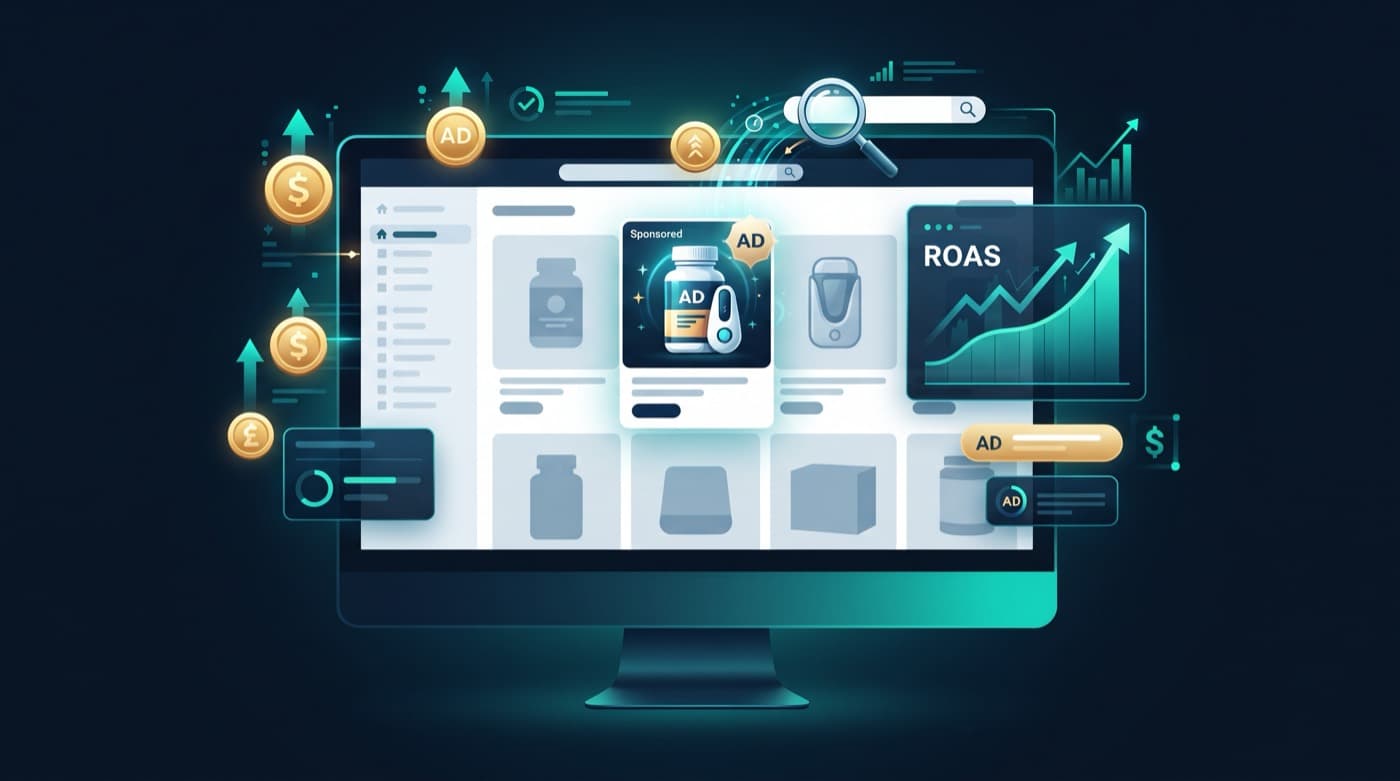
| Advertising cost (% of revenue) | 8–15% | 5–12% | 2–5% (trade spend) | 15–25% (paid acquisition) |
| Effective take-home margin | 25–40% | 28–42% | 30–38% | 35–55% |
Actionable takeaway: Build a per-SKU margin model that maps your landed cost through every channel’s commission, fulfillment, and advertising costs. If any channel yields a net margin below 20% for CHC products, you have a pricing problem that needs structural fixing, not just promotional adjustment.
Digital Shelf Analytics
Digital shelf analytics is the e-commerce equivalent of retail audit data — it tells you how your products appear, rank, and perform relative to competitors across online platforms. In a market where search rank determines sales velocity, monitoring your digital shelf is not optional.
The core metrics to track:
- Search rank position: Where does your product appear for your target keywords? Track this weekly at minimum.
- Share of search: What percentage of search results for your category feature your brand versus competitors?
- Content compliance score: Are all your listings fully optimized with complete titles, images, A+ Content, and accurate product information?
- Price compliance: Are your authorized sellers maintaining MAP? Are unauthorized sellers undercutting?
- Rating and review velocity: How quickly are you accumulating reviews, and what is your average rating versus competitors?
- Stock availability: How often are your products showing as out of stock? Even a few hours of stockout on a top-selling SKU costs you search rank that takes weeks to recover.
Tools like Profitero, DataWeave, and Salsify offer digital shelf analytics capabilities, though their coverage of GCC platforms varies. For Amazon.sa specifically, Helium 10 and Jungle Scout provide adequate keyword tracking and competitor monitoring. Many brands in the region still rely on manual spot-checks, which is workable for small portfolios but unsustainable as your SKU count grows beyond 50 products.
E-Pharmacy Regulations in KSA: SFDA Requirements
This is where many brands — especially international ones entering the GCC — underestimate the complexity. The Saudi Food and Drug Authority (SFDA) has established specific regulations for online pharmaceutical sales that apply to both OTC medicines and certain consumer healthcare categories. Understanding these requirements is critical because non-compliance can result in product delisting, fines, or loss of import authorization.
Key SFDA E-Pharmacy Requirements
- Licensed platform requirement: Only platforms licensed by the SFDA as e-pharmacies can sell registered pharmaceutical products online. This includes OTC medicines and certain medical devices. Consumer healthcare products like cosmetics, supplements (depending on classification), and personal care items have different rules.
- Product registration: All pharmaceutical products sold online must have valid SFDA registration. Consumer healthcare products classified as cosmetics require SFDA cosmetic notification. Supplements classified as health foods fall under different requirements.
- Marketing claims compliance: All product listing content — titles, descriptions, images, and A+ Content — must comply with SFDA advertising regulations. Medical claims require supporting evidence. Comparative claims against competitors are restricted. Before-and-after imagery has specific requirements.
- Temperature-controlled logistics: Certain CHC products require cold chain or controlled-temperature shipping. The SFDA requires documented evidence that temperature-sensitive products maintain proper conditions throughout the delivery chain.
- Pharmacist oversight: For OTC medicines sold through e-pharmacy platforms, a licensed pharmacist must be available for consultation. This is a platform-level requirement, but brands should verify that their retail partners comply.
| Product Category | SFDA Classification | Can Sell on Marketplace? | Requires Licensed E-Pharmacy? | Key Compliance Notes |
|---|---|---|---|---|
| OTC Medicines | Pharmaceutical | No (restricted) | Yes | Full SFDA drug registration required |
| Vitamins & Supplements | Health food / Supplement | Yes (with conditions) | No (but recommended) | SFDA health food notification required |
| Dermocosmetics | Cosmetic | Yes | No | SFDA cosmetic notification; no medical claims |
| Medical Devices (Class I) | Medical device | Yes (with conditions) | No | MDMA registration; proper labeling requirements |
| Oral Care (therapeutic) | Cosmetic or pharmaceutical | Depends on classification | If pharmaceutical, yes | Classification determines channel eligibility |
| Personal Care / Hygiene | Cosmetic | Yes | No | Standard cosmetic notification |
Actionable takeaway: Before listing any product online, verify its SFDA classification and confirm which platforms are authorized to sell that category. A single compliance violation can trigger a broader audit of your entire online portfolio. Work with your regulatory affairs team to build a product-by-product e-commerce eligibility matrix.
Last-Mile Delivery Challenges for Health Products
Consumer healthcare products create unique last-mile delivery challenges that do not exist for typical e-commerce categories. These challenges directly impact customer satisfaction, product efficacy, and regulatory compliance.
Temperature sensitivity: Sunscreens, certain dermocosmetics, probiotics, and temperature-sensitive supplements degrade in the extreme GCC heat. Summer temperatures exceeding 50°C make standard delivery vans unsuitable for many CHC products. You need either cold-chain logistics partners or heat-stable packaging solutions — both add cost.
Packaging integrity: Health products require intact packaging to maintain consumer trust and regulatory compliance. Damaged boxes, broken seals, or crushed cartons create returns that cost 3–5x the original shipping cost when you factor in reverse logistics, quality inspection, and potential product write-off.
Delivery speed expectations: GCC consumers have been conditioned by same-day and next-day delivery from Amazon and Noon. Health products, especially those purchased for acute needs (pain relief, cold remedies, first aid), have an even higher urgency. If your fulfillment model cannot deliver within 24 hours in major cities, you lose sales to pharmacy apps that offer 2-hour delivery.
My recommendation: For marketplace channels, use FBA (Fulfilled by Amazon) or Noon’s fulfillment wherever possible — it solves speed and reliability. For D2C or pharmacy-direct channels, partner with specialized healthcare logistics providers like Zajel (KSA) or Fetchr (UAE) that have temperature-controlled fleets. The cost premium of 15–20% over standard logistics is justified by the reduction in returns and customer complaints.
Subscription Models for Chronic Care OTC
One of the most underutilized e-commerce strategies for CHC brands in the GCC is subscription commerce for chronic care and repeat-use products. The economics are compelling: subscription customers have 3–4x higher lifetime value, predictable revenue streams, and significantly lower cost per acquisition after the initial conversion.
Categories with strong subscription potential:
- Daily vitamins and supplements: Multivitamins, vitamin D, omega-3, and other daily-use supplements are natural subscription candidates with 30-day replenishment cycles.
- Chronic skincare routines: Dermocosmetic regimens for acne, hyperpigmentation, or anti-aging involving multiple products used daily.
- Oral care consumables: Electric toothbrush replacement heads, specialty toothpaste, and mouthwash.
- Chronic OTC medicines: Allergy medications, antacids, and pain management products used regularly.
- Baby care essentials: Diaper cream, baby skincare, and pediatric vitamins.
Amazon’s Subscribe & Save program is already available on Amazon.sa and offers a built-in subscription infrastructure. The discount structure (typically 5–15% off for subscribers) needs to be factored into your margin model, but the predictability and reduced churn usually more than compensate. For D2C brands, platforms like Shopify (widely used in the GCC) support subscription through apps like Recharge or Bold Subscriptions.
Building an E-Commerce P&L for CHC Brands
Too many brands launch e-commerce without a proper P&L model, treating it as an extension of their existing trade business. This is a fundamental mistake. E-commerce has a completely different cost structure, and if you do not model it separately, you will either overinvest (burning cash for growth) or underinvest (never reaching the scale needed for profitability).
The E-Commerce P&L Framework
| P&L Line Item | Marketplace Model | D2C Model | Notes |
|---|---|---|---|
| Gross Revenue | 100% | 100% | — |
| Returns & Refunds | (3–8%) | (5–12%) | CHC returns tend lower than fashion |
| Net Revenue | 92–97% | 88–95% | — |
| COGS | (25–40%) | (25–40%) | Includes landed cost + packaging |
| Marketplace Commission | (12–18%) | N/A | — |
| Payment Processing | Included in commission | (2.5–3.5%) | Stripe, Tap, HyperPay |
| Fulfillment & Shipping | (5–10%) | (8–15%) | Higher for D2C due to smaller scale |
| Advertising & Marketing | (8–15%) | (15–25%) | Includes PPC, social, influencers |
| Platform / Tech Costs | (1–2%) | (3–5%) | Shopify, apps, analytics tools |
| Customer Service | (1–2%) | (2–4%) | Arabic + English support required |
| Net Margin (EBITDA) | 8–20% | 5–18% | Mature brands target 15%+ |
The key insight from this framework: marketplace e-commerce reaches profitability faster due to lower fixed costs and built-in traffic, but D2C offers higher long-term margin potential once the brand can reduce its customer acquisition cost through organic traffic, email marketing, and word-of-mouth.
Most CHC brands I have worked with reach marketplace profitability within 6–9 months and D2C profitability within 12–18 months, assuming they invest in listing optimization and maintain advertising discipline. The brands that never reach profitability are typically the ones that chase revenue growth through aggressive discounting without building underlying brand demand.
Actionable takeaway: Build a separate P&L for each e-commerce channel. Model three scenarios (conservative, base, optimistic) and pressure-test your assumptions on returns, advertising efficiency, and commission rates. Share this with your CFO before committing to any e-commerce investment — it builds credibility and ensures the business case is solid.
Social Commerce: The Emerging Frontier
Social commerce — the ability to discover, evaluate, and purchase products directly within social media platforms — is growing rapidly in the GCC. For consumer healthcare brands, this represents both an opportunity and a challenge.
TikTok Shop
TikTok Shop launched in Saudi Arabia in 2025 and has already become a significant channel for beauty and wellness products. The format — short-form video leading directly to purchase — works exceptionally well for products with visual appeal and demonstrable results. Dermocosmetics, skincare routines, and supplement “unboxings” perform particularly well.
The challenge for CHC brands is content compliance. TikTok’s algorithm rewards authentic, creator-driven content, but SFDA regulations restrict the health claims that can be made in promotional content. Brands need to train their influencer partners on compliant messaging — a process that requires dedicated regulatory review of every piece of content before it goes live.
Instagram Shopping
Instagram remains the dominant platform for premium consumer healthcare brands in the GCC, particularly for dermocosmetics and wellness categories. Instagram Shopping tags allow direct product linking from posts and stories. The platform’s visual format suits before-and-after content, product demonstrations, and dermatologist-led educational content.
For pharma ecommerce in the GCC, Instagram works best as a mid-funnel tool — driving product consideration and intent rather than direct conversion. Attribution can be challenging, but brands consistently report that Instagram-driven traffic converts at 2–3x the rate of cold paid search traffic on marketplaces.
Social Commerce Compliance Framework
| Platform | Commerce Feature | Compliance Risk Level | Best CHC Categories |
|---|---|---|---|
| TikTok Shop | In-app purchase, live selling | High (claims monitoring needed) | Skincare, supplements, wellness |
| Instagram Shopping | Product tags, shop tab | Medium (visual content review) | Dermocosmetics, premium wellness |
| Snapchat (KSA) | AR try-on, product links | Low-medium | Skincare, beauty-adjacent CHC |
| WhatsApp Commerce | Catalog, direct ordering | Low | Reorders, pharmacy-direct sales |
Common Mistakes Pharma Brands Make Going Online
After two decades of watching pharmaceutical and consumer healthcare companies attempt e-commerce transitions in the GCC, I have seen the same mistakes repeated across organizations of all sizes. Here are the most damaging ones and how to avoid them.
1. Treating E-Commerce as a Sales Channel, Not a Business Model
The most fundamental mistake. E-commerce is not simply another distribution outlet like adding a new pharmacy chain. It requires dedicated resources (people, technology, budget), a separate P&L, and a different operational cadence. Brands that bolt e-commerce onto their existing trade team without structural investment consistently underperform.
2. Ignoring Channel Conflict Until It Becomes a Crisis
When your top pharmacy partner calls because your product is 20% cheaper on Amazon.sa than on their shelf, you have a crisis. This is entirely preventable with proactive MAP policy implementation, authorized seller management, and differentiated online SKUs. Address channel conflict before you launch, not after.
3. Launching With Poor Product Content
Many brands rush to list products online with minimal titles, a single product image, and no A+ Content. This is the equivalent of placing your product on a bottom shelf with no POS material in a physical store. The first 90 days of a product listing are critical for establishing search rank — launching with weak content creates a deficit that takes months to recover from.
4. Overspending on Advertising Without Conversion Optimization
I have seen brands spend SAR 50,000 per month on Amazon PPC while their product listings had three-star ratings and incomplete content. Advertising drives traffic, but if your listing does not convert, you are paying for visitors who buy from your competitors. Fix your digital shelf before you scale your ad spend.
5. Neglecting Arabic Content
Over 60% of online health product searches in Saudi Arabia are conducted in Arabic. Brands that only optimize for English keywords are invisible to the majority of their potential customers. Every product listing should have fully bilingual content, and your keyword strategy must include Arabic search terms.
6. Underestimating Regulatory Complexity
What you can say in a pharmacy is not what you can say online. What you can say on your own website is not what you can say on a marketplace listing. What an influencer can say about your product on TikTok has different rules than what you can print on your packaging. Brands that do not have a dedicated regulatory review process for e-commerce content will eventually face compliance action.
7. Failing to Plan for Reverse Logistics
Returns in consumer healthcare e-commerce are typically 3–8%, lower than fashion but still significant. The problem is that most returned CHC products cannot be resold due to seal integrity and hygiene concerns. If your P&L does not account for product write-offs on returns, your actual margins will be materially lower than your projections.
8. No Investment in Reviews and Ratings
In health categories, consumer trust is everything. A product with 4.5 stars and 200 reviews will outsell a superior product with 3.8 stars and 15 reviews every time. Yet most CHC brands have no systematic program for soliciting reviews, responding to negative feedback, or leveraging satisfied customers as brand advocates. Amazon’s Vine program (available in KSA) and post-purchase email sequences are essential tools that too few brands utilize.
Actionable takeaway: Score your organization against each of these eight mistakes on a scale of 1–5. Be honest. Any area scoring 3 or below needs a corrective action plan within 30 days. Share the assessment with your leadership team — transparency about gaps is the first step toward closing them.
Putting It All Together: Your E-Commerce Roadmap
Winning in e-commerce for consumer healthcare in the GCC is not about doing one thing perfectly — it is about building an integrated capability across product content, pricing, distribution, compliance, and analytics. Here is the phased approach I recommend for brands entering or scaling their online presence.
Phase 1 (Months 1–3): Foundation. Audit your current online presence. Establish MAP policy. Optimize your top 20 SKU listings on Amazon.sa and Noon. Set up digital shelf monitoring. Ensure SFDA compliance for all online content.
Phase 2 (Months 4–6): Scale. Launch sponsored advertising campaigns with proper attribution. Activate A+ Content across all key products. Begin influencer partnerships with compliant briefing processes. Implement subscription models for eligible products.
Phase 3 (Months 7–12): Optimize. Build your e-commerce P&L with real data. Evaluate D2C storefront opportunity. Expand to secondary platforms (Whites, Lemon, United Pharmacy online). Develop social commerce capability on TikTok Shop and Instagram Shopping.
Phase 4 (Year 2): Differentiate. Invest in proprietary customer data and CRM. Build exclusive online SKUs and bundles. Develop content-driven organic traffic through SEO and health education. Target e-commerce contribution of 15–20% of total brand revenue.
The brands that will dominate consumer healthcare e-commerce in the GCC over the next five years are the ones making serious, structured investments today. Not experiments. Not pilots. Real business capability with dedicated teams, separate P&Ls, and executive sponsorship. The window for early-mover advantage is still open in this market — but it is closing fast.