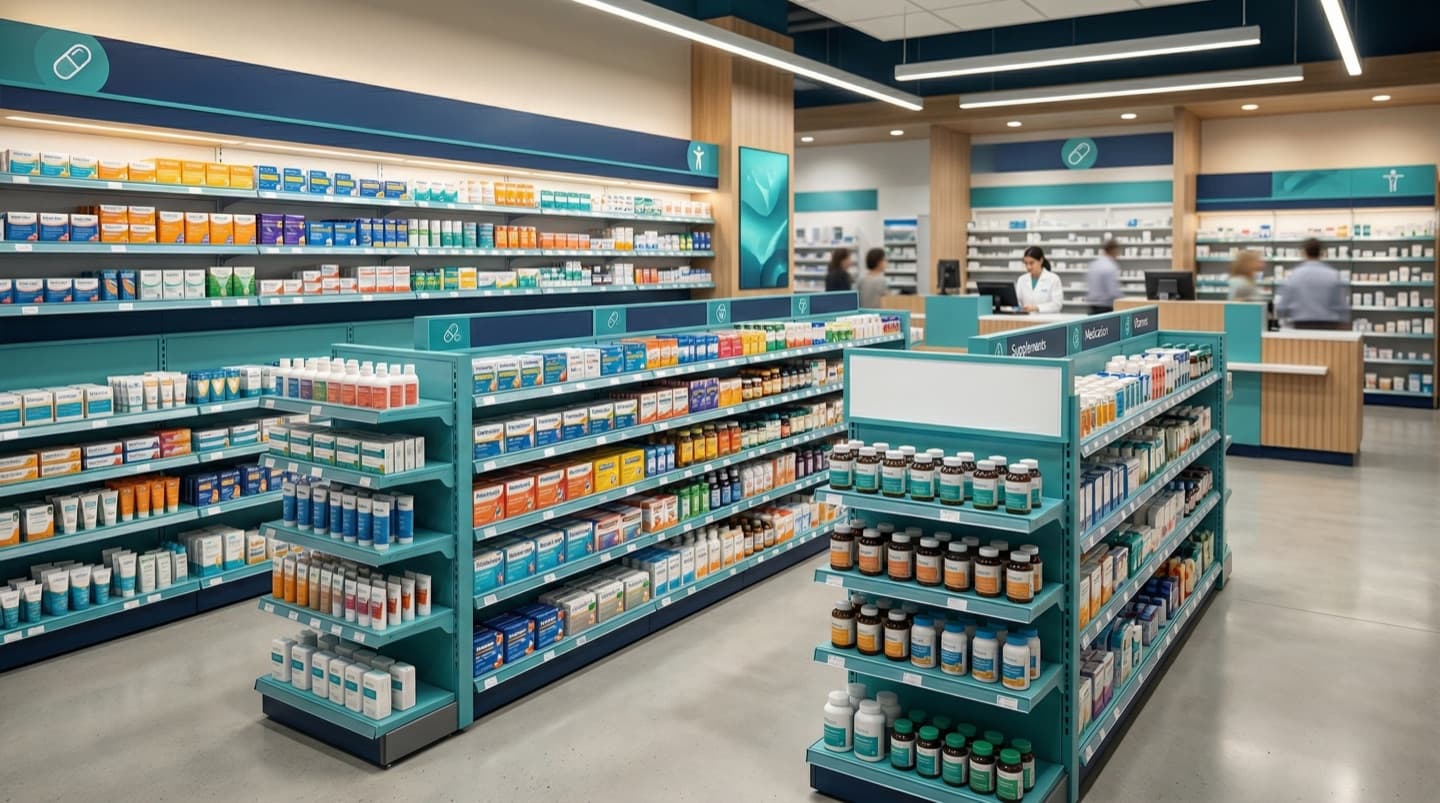
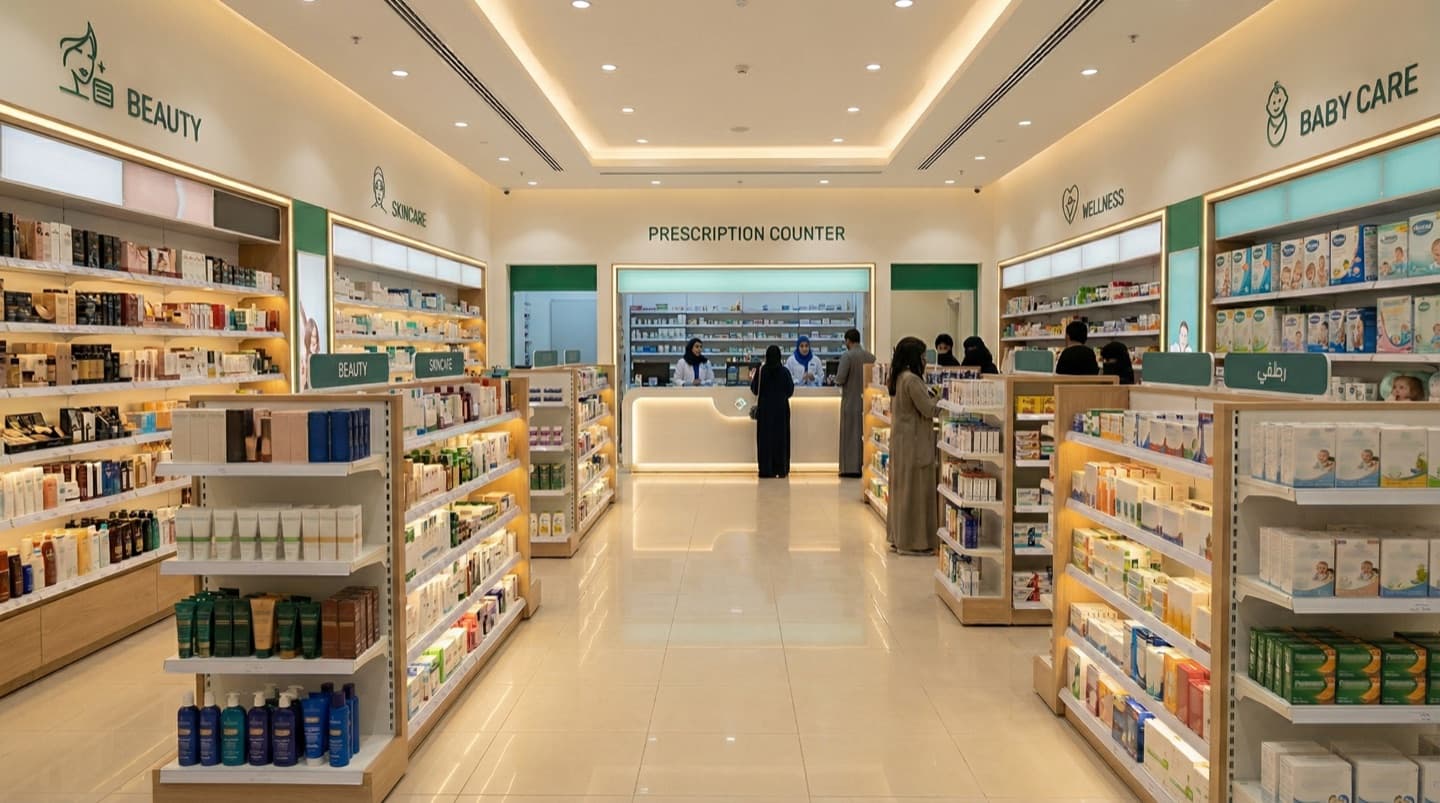
The pharmacy channel in Saudi Arabia is not what it was ten years ago. The shift from a fragmented independent pharmacy market to one dominated by a handful of sophisticated retail pharmacy chains has fundamentally changed how pharmaceutical and consumer healthcare companies need to approach channel management. The companies that understood this shift early and adapted their commercial model accordingly are pulling away. The ones still managing the KSA pharmacy channel the way they did in 2015 are losing ground every quarter.
This guide is a complete reference for pharmaceutical and consumer healthcare brand managers navigating the KSA pharmacy channel in 2026. It covers the landscape, the players, the commercial frameworks, and the activation strategies that drive real sell-out results.
The KSA Pharmacy Landscape: Who Controls the Channel
Saudi Arabia has one of the most concentrated pharmacy retail markets in the Middle East. While independent pharmacies still operate in large numbers — particularly in residential neighborhoods, secondary cities, and areas where chain expansion has been slower — the major organized chains now control a disproportionate share of consumer traffic and pharmaceutical sales value.
The four chains that every pharmaceutical brand team in KSA must have an active strategy for:
- Nahdi Medical Company: The dominant player with the largest network, a sophisticated loyalty and CRM infrastructure, a growing private label business, and an increasingly data-driven approach to ranging and category management. Nahdi should be treated as a strategic partner, not just a retail account.
- Al-Dawaa Pharmacies: Strong presence in Riyadh and the Eastern Province, historically strong in hospital and clinic adjacency locations. Al-Dawaa’s commercial approach is more relationship-driven than Nahdi’s data-driven model.
- Whites Pharmacy: Growing aggressively, with a positioning that blends health and beauty retail, making it particularly relevant for dermo-cosmetics, personal care, and consumer healthcare brands targeting a younger, more affluent demographic.
- Hamdard: Smaller scale but significant in specific regions and in the complementary medicine and herbal product categories.
Beyond the chains, independent pharmacies remain important for full national coverage, particularly for prescription drugs where hospital and clinic-adjacent independent pharmacies capture significant volume. A distribution strategy that is chain-only will miss substantial market reach.
Understanding Sell-In vs. Sell-Out: The Fundamental Distinction
The most important conceptual shift for any pharmaceutical brand manager managing a pharmacy channel is understanding the difference between sell-in and sell-out — and designing your commercial model around sell-out, not sell-in.
Sell-in is the volume you push into the channel — the case quantities invoiced to the distributor or directly to the pharmacy chain. Sell-in can be inflated through promotional deals, quarter-end loading, and trade terms that incentivize forward buying. High sell-in with low sell-out means you are accumulating stock in the channel that will eventually come back as returns, expire on the shelf, or create pricing pressure as the chain tries to clear excess inventory.
Sell-out is what patients and consumers actually purchase from the pharmacy shelf. This is the number that matters for sustainable brand growth. Building a pharmacy channel strategy around sell-out means:
- Investing in shelf presence and visibility so your product is selected when the consumer is in front of the fixture
- Building pharmacist recommendation capability so your brand is suggested when the consumer asks for advice
- Ensuring your product is in-stock at the right stores at the right times — zero sell-out opportunity if your product is out of stock
- Measuring your performance at the sell-out level, not just at the invoice level
Key Account Management: Building the Joint Business Plan
For the major pharmacy chains, key account management (KAM) is the commercial framework that governs the relationship. At its best, KAM is a genuine partnership where both the pharmaceutical company and the pharmacy chain are working toward shared commercial objectives. In practice in KSA, it is often a negotiation over trading terms, listing fees, and promotional slots.
The foundation of effective KAM for KSA pharmacy chains is the joint business plan (JBP). A functional JBP should cover:
- Agreed sales targets: Volume and value targets by brand and SKU, with quarterly milestones and the assumptions behind them
- Ranging agreement: Which SKUs will be listed, in which store tiers, at what shelf position
- Trading terms: The full commercial structure — listing fees, promotional contributions, payment terms, return policies, and any volume rebates
- Promotional calendar: Planned activations tied to the chain’s commercial calendar (Ramadan, National Day, health awareness campaigns, quarterly promotions)
- Supply and logistics agreements: Lead times, order minimums, delivery windows, and how out-of-stock situations will be managed
- Category management collaboration: How you will support the chain with planogram data, category insights, and market research
- Review cadence: Monthly or quarterly business review schedule and the KPIs that will be tracked
Listing Fees and Trading Terms: What to Expect
Listing fees are a commercial reality in the KSA pharmacy channel. The major chains charge for ranging new products, maintaining shelf space, and accessing premium promotional positions. Understanding the structure of these fees and building them into your P&L model is essential before committing to a new product launch or SKU extension.
Typical listing fee structures in KSA pharmacy chains include:
- Initial ranging fee: A one-time payment per SKU to get a new product listed in the chain’s system and ranging planogram
- Annual maintenance fee: A recurring fee to maintain the product’s active status in the range, particularly in chains with periodic category reviews
- Promotional contributions: Payments or product contributions for features in the chain’s promotional leaflet, app, digital channels, or in-store display programs
- Gondola end and display fees: Fees for premium secondary display positions, including gondola ends, entrance displays, and pharmacy counter placements
The key discipline in negotiating trading terms is to ensure that the investment is tied to commercial outcomes. A listing fee that gets you into the range but provides no activation support rarely generates a positive return. Push for promotional activity commitments alongside any listing investment.
KSA Pharmacy Channel — Sell-Out Influence by Factor
Estimated sell-out impact score (0–10) per channel investment lever
Listing fees and sell-in deals score low without a linked activation and sell-out plan.
Pharmacy Activation Programs That Drive Sell-Out
Activation is where the channel investment becomes consumer-facing performance. The most effective pharmacy activation programs in Saudi Arabia combine three elements: in-store visibility, pharmacist engagement, and consumer pull.
In-store visibility: Shelf position, facing count, secondary displays, counter placements, and branded POSM (point-of-sale materials) that draw attention to your product at the moment of purchase. The primary shelf battle is won or lost in the first three seconds a consumer spends in front of the fixture.
Pharmacist engagement: In Saudi Arabia, the pharmacist recommendation is a disproportionately powerful purchase driver, particularly for OTC products. Pharmacists who know your product well, understand its benefits relative to alternatives, and have been appropriately recognized for their role as category advisors will recommend it more frequently. Pharmacist engagement programs must be designed within SFDA guidelines — educational programs and product training are permitted; cash payments for recommendations are not.
Consumer pull: Digital promotions through the chain’s app or loyalty platform, social media amplification of in-store promotions, and consumer-facing offers (bundle packs, loyalty point bonuses) that give the consumer a reason to seek out your product specifically rather than accepting a pharmacist’s generic recommendation.
E-Pharmacy: The Channel Within the Channel
Online pharmacy in Saudi Arabia has grown from a regulatory experiment to a commercially meaningful channel in the space of a few years. Nahdi Online, Al-Dawaa Online, and third-party health platforms are capturing an increasing share of OTC and consumer healthcare purchases, particularly for planned replenishment categories (vitamins, skin care, chronic condition management products).
Managing e-pharmacy effectively requires a distinct approach from physical channel management:
- Product content optimization (images, descriptions, claims, ingredient listings) for search within the pharmacy’s digital platform
- Pricing alignment between physical and digital channels to avoid consumer arbitrage and channel conflict
- Review and rating management — in-app reviews are a significant purchase decision factor for online pharmacy consumers
- Sponsored placement within the pharmacy’s app or website for high-competition categories
- Stock availability management to ensure online listings are not showing as out-of-stock, which drives consumers to competitors
Distribution Strategy: Reaching Beyond the Major Chains
Full market coverage in KSA requires distribution infrastructure that goes beyond the major chains. For most pharmaceutical companies, this means working with one or more licensed pharmaceutical distributors who cover the independent pharmacy network.
Key distributor management decisions:
- Exclusive vs. non-exclusive distribution: Exclusive distribution simplifies management but limits your leverage; non-exclusive maintains competitive tension but creates complexity
- Geographic coverage: Ensure your distributor actually reaches the regions where your target patient or consumer population lives — many distributors have strong coverage in major cities but weak coverage in secondary cities and rural areas
- Service level standards: Agree and monitor out-of-stock rates, order fulfillment speed, cold chain compliance (where relevant), and returns management
- Sell-through data access: Negotiate access to distributor sell-in data by pharmacy account — without this, you are managing the channel blind
Key Takeaways
- The KSA pharmacy market is dominated by four major chains (Nahdi, Al-Dawaa, Whites, Hamdard) but independent pharmacies remain essential for full coverage
- Sell-out — what patients actually buy — is the metric that matters; build your commercial model around driving consumer purchases, not channel loading
- A joint business plan with each major chain is the foundation of effective key account management — it converts a transactional relationship into a commercial partnership
- Listing fees are a cost of doing business in organized pharmacy retail — negotiate activation commitments alongside any listing investment
- E-pharmacy is now a distinct channel requiring its own digital shelf management, not an afterthought to your physical channel strategy
What to Do Next
Conduct a channel audit: for each major pharmacy chain, map your current ranging (which SKUs are listed, in how many stores), your current sell-out performance relative to your sell-in, your active joint business plan status, and the activation programs running in the current quarter. The gaps you find are your pharmacy channel priorities for the next business planning cycle.
For the in-store execution tactics that convert channel presence into consumer sales, read the companion article: Merchandising for Consumer Healthcare: How to Win at the Pharmacy Shelf.