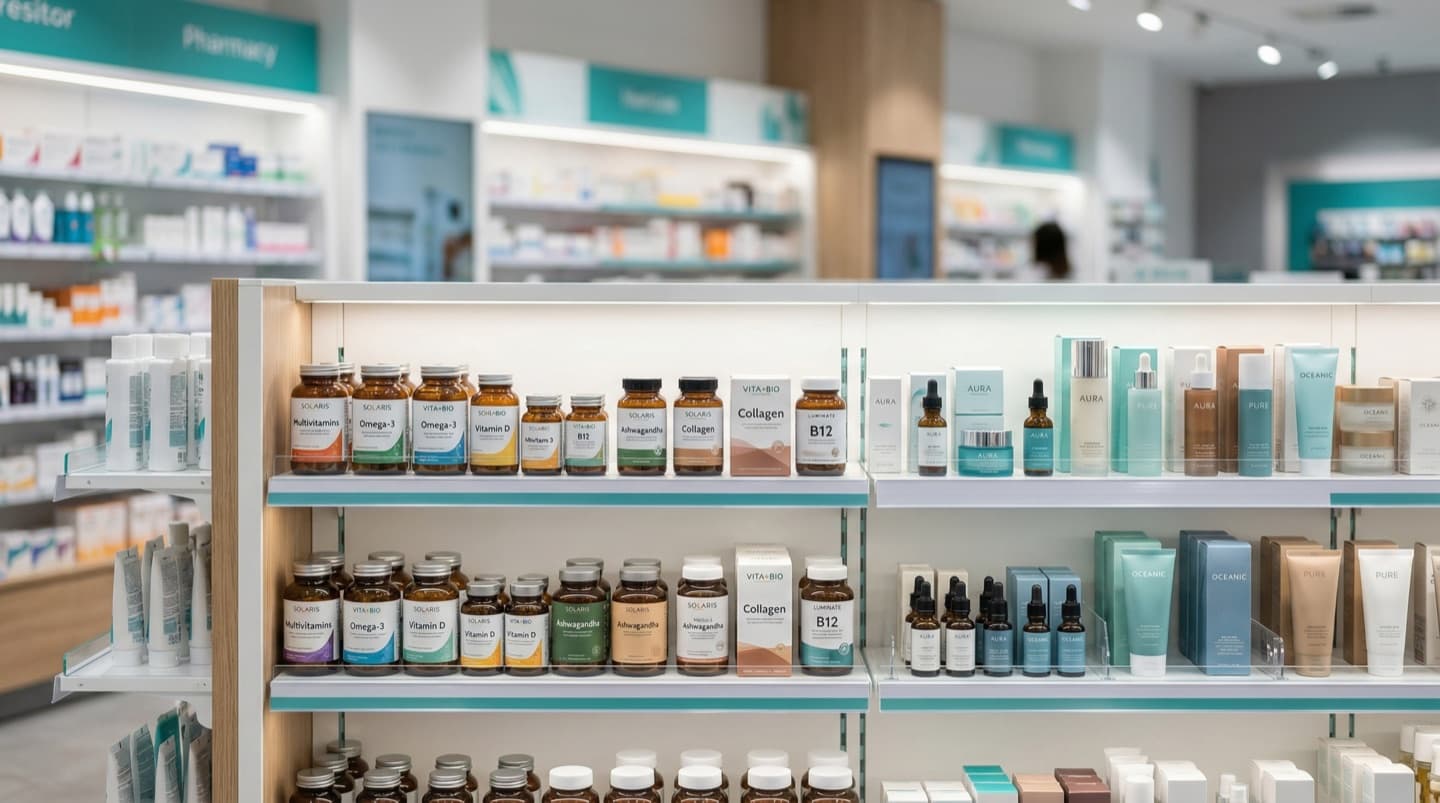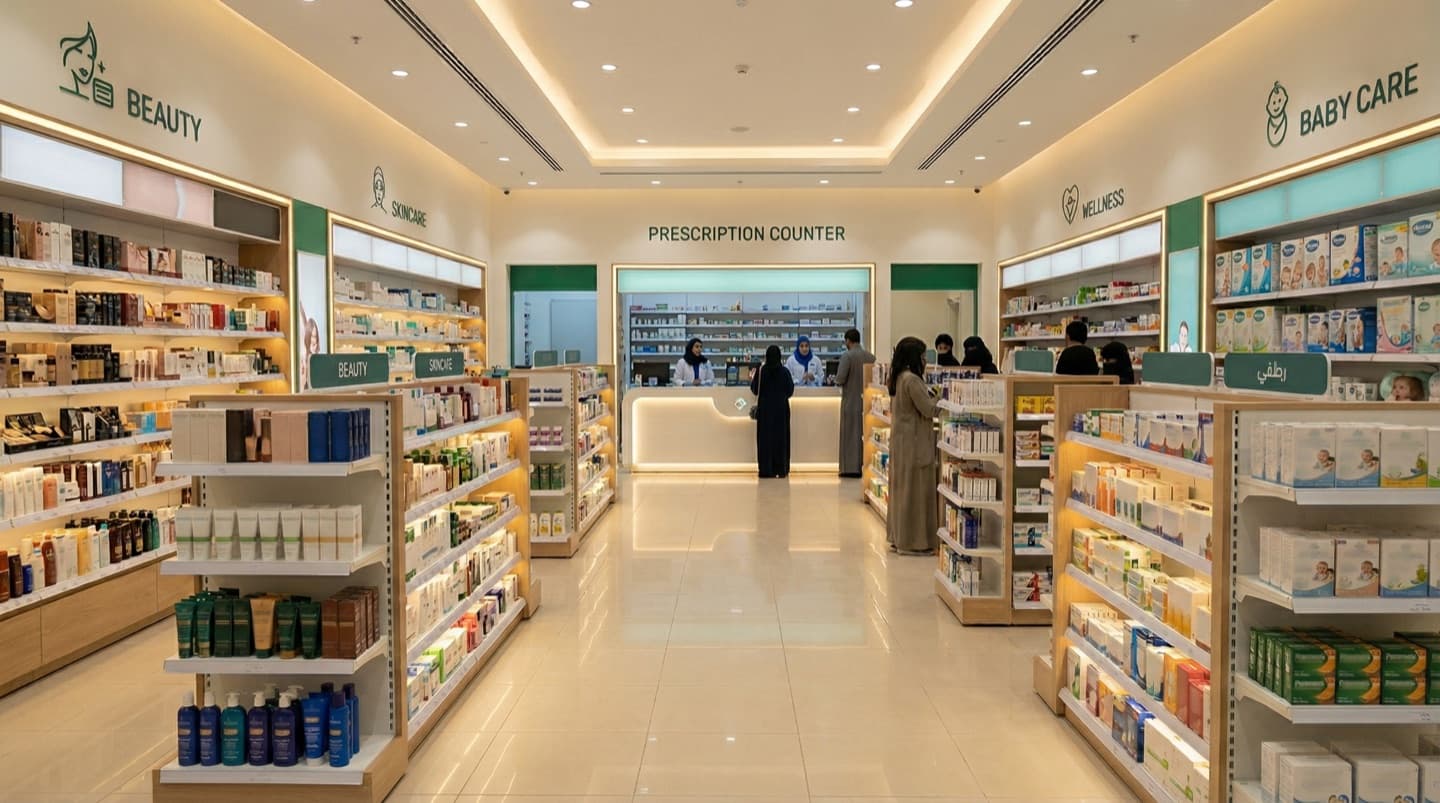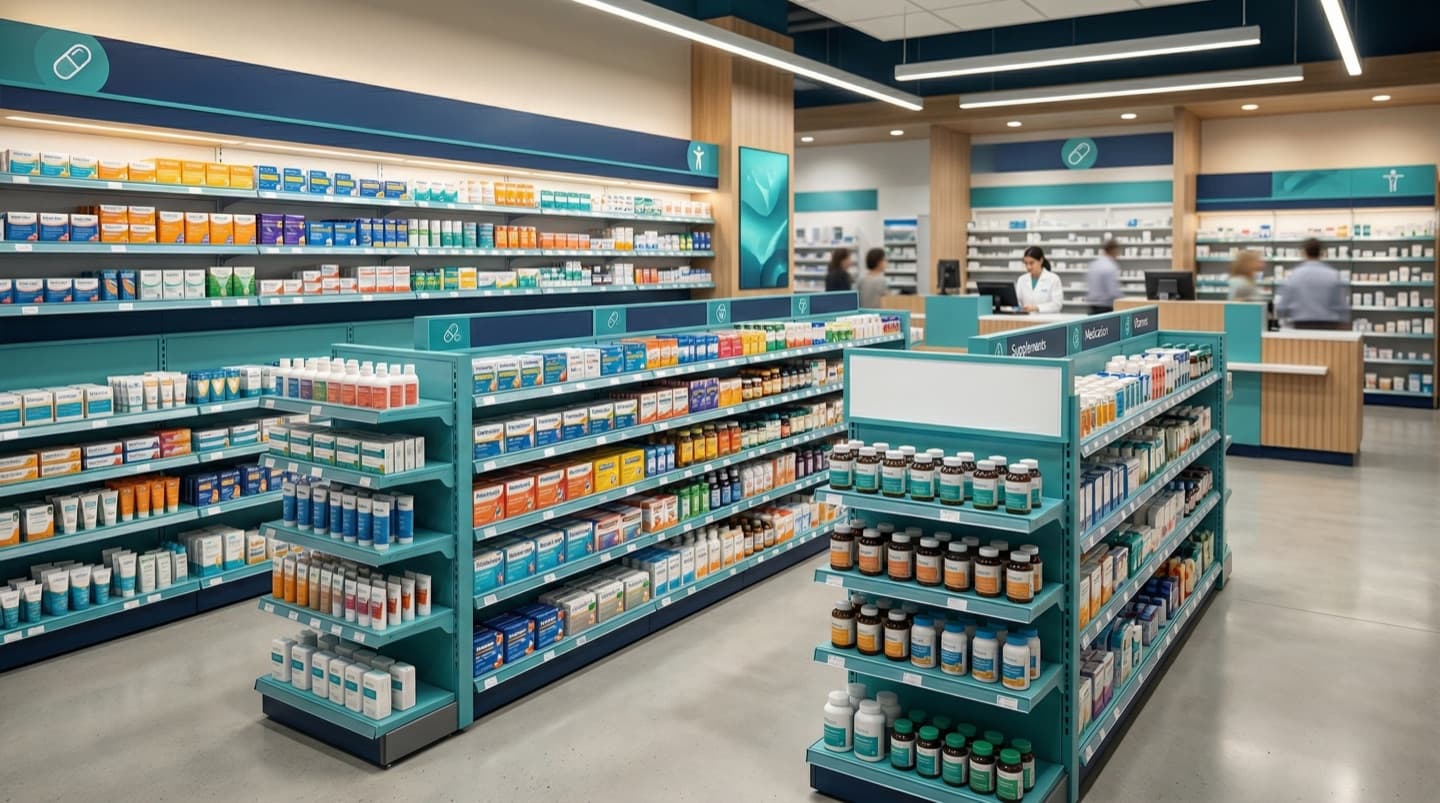
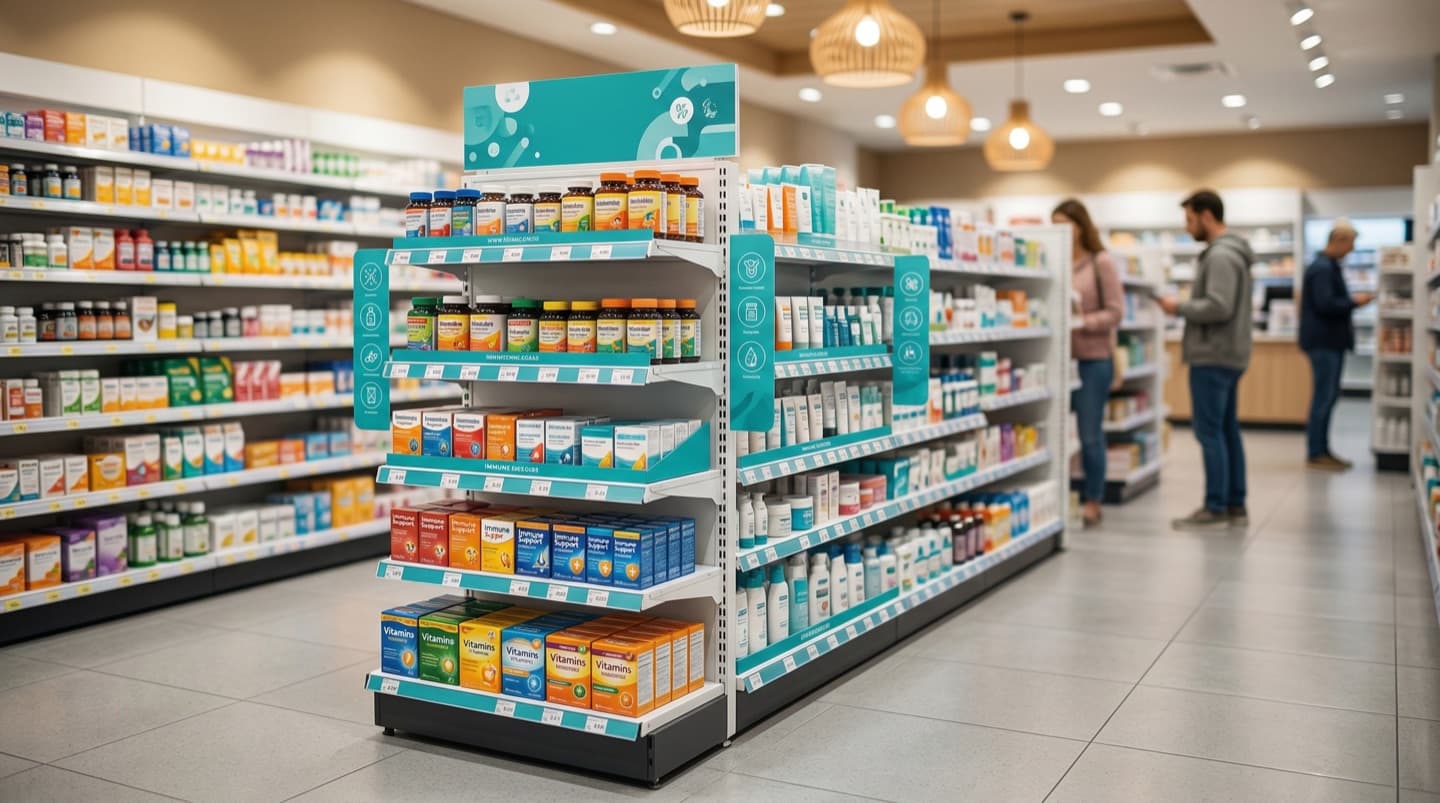
There is a hard truth that most pharma brand managers eventually learn: your product can have the best clinical data, the strongest brand equity, and the most compelling advertising — and still lose at the shelf. The last three feet of the purchase journey, the space between the shopper’s hand and the pharmacy shelf, is where brands are made or broken. And yet, merchandising remains one of the most underinvested and poorly understood levers in pharmaceutical commercial strategy.
Over more than 20 years of building consumer healthcare and dermocosmetic brands across the GCC, I have seen merchandising done brilliantly and I have seen it done catastrophically. I have watched a mid-tier sunscreen brand outsell the category leader simply because it owned the right 60 centimeters of shelf space at eye level in Nahdi. I have also watched premium brands with massive advertising budgets collect dust on bottom shelves because nobody on the team understood planogram negotiation.
This guide covers everything a pharma brand team needs to know about pharmacy merchandising in 2026 — from the fundamentals of shelf placement hierarchy to the emerging world of digital shelf optimization on e-pharmacy platforms. Whether you are a brand manager, a trade marketing lead, or a commercial director, you will walk away with frameworks you can deploy this quarter.
70%
Of pharmacy purchase decisions made or changed at the shelf
2.5×
More sell-out for brands with compliant planograms vs. no-planogram
22%
Average sales uplift from a secondary display in a high-traffic pharmacy
1 Day
Of out-of-stock in a flagship pharmacy can cost thousands in lost revenue
What Merchandising Really Means in the Pharmacy Context
Let me start by clearing up a misconception. When pharma people hear “merchandising,” they often think of promotional displays and shelf talkers. That is part of it, but pharmacy merchandising is far broader than that.
In the pharmacy context, merchandising is the entire discipline of optimizing how your products are presented, positioned, and promoted within the retail pharmacy environment — both physical and digital — to maximize sell-out. It encompasses shelf placement, planogram strategy, point-of-sale materials, category adjacency, visual presentation, stock availability, pricing display, and increasingly, digital shelf optimization on e-pharmacy platforms.
The reason merchandising matters so disproportionately in pharmacy is that the purchase decision in a pharmacy is fundamentally different from a grocery store or a department store. In pharmacy retail, you have three types of shoppers:
- Prescription-directed shoppers: They arrive with a specific product in mind because a physician prescribed it. Even here, merchandising matters — the pharmacist may recommend an alternative if the prescribed product is not visible or available, and the shopper may add complementary products (a moisturizer alongside a prescribed acne treatment, for example).
- Category-directed shoppers: They know they need a product from a category (a sunscreen, a pain reliever, a vitamin supplement) but have not decided on a specific brand. This is where merchandising has the single greatest impact on sell-out. The brand that is most visible, most accessible, and most persuasively presented wins.
- Impulse shoppers: They did not plan to buy the product but are influenced by in-store visibility, promotions, or pharmacist recommendations. Checkout-adjacent placement and end-cap displays drive this behavior.
Effective pharmacy merchandising addresses all three shopper types simultaneously. It ensures your products are findable for the directed shopper, compelling for the category browser, and visible for the impulse buyer.
Shelf Placement Hierarchy: The Physics of Sell-Out
Not all shelf positions are created equal. Decades of retail research — and my own experience tracking sell-out data across hundreds of pharmacy doors in Saudi Arabia — confirm a clear hierarchy of shelf effectiveness. Understanding this hierarchy is foundational to any merchandising strategy.
| Shelf Zone | Height Range | Sell-Out Impact | Best For |
|---|---|---|---|
| Eye Level (“Buy Level”) | 120–160 cm from floor | Highest — baseline index 100 | Hero SKUs, premium brands, new launches |
| Hand Level (just below eye) | 90–120 cm from floor | High — index 80–90 | Strong secondary SKUs, mid-price brands |
| Top Shelf (above eye level) | 160–200 cm from floor | Moderate — index 50–65 | Established brands with strong awareness, large packs |
| Floor Level (bottom shelf) | 0–60 cm from floor | Lowest — index 30–45 | Bulk packs, economy brands, low-margin SKUs |
The data is unambiguous: eye-level placement can deliver 2–3 times the sell-out of floor-level placement for the same product. This is not opinion — it is observable in POS data across every major pharmacy chain in the Kingdom.
Practical Implications
- Negotiate eye-level placement for hero SKUs. Your top-selling product, or the product you are investing the most in building, should occupy eye-level space. This is worth paying a premium for in trade terms.
- Vertical blocking beats horizontal spreading. Owning a vertical column of shelf space (from hand level to eye level) creates a stronger visual block than scattering products horizontally across a shelf. The human eye scans vertically within categories more often than it scans horizontally.
- Facings matter more than depth. Having three product facings (the number of units visible from the front) is more valuable than having ten units deep on a single facing. Visibility drives trial; depth prevents stock-outs but does not drive conversion.
- Floor level is not a death sentence — if you manage it. For brands with lower trade spend budgets, floor-level placement can still work if you compensate with strong POSM (shelf talkers, floor stickers) and higher-than-average product packaging visibility.
Planogram Strategy for Pharma Brands
A planogram is a visual diagram that dictates exactly where every product sits on a pharmacy shelf. In major chains like Nahdi, Al Dawaa, and Whites, planograms are centrally managed and updated quarterly. For pharma brands, influencing planogram decisions is one of the highest-ROI activities in trade marketing.
How Planogram Decisions Get Made
Understanding the decision-making process is essential. In most KSA pharmacy chains, planogram decisions are driven by a combination of:
- Category sales velocity: Products with higher sell-out per linear centimeter earn more shelf space. This is the single most important factor.
- Trade terms and listing fees: Brands that invest in trade terms (listing fees, shelf rental, promotional support) receive priority placement. This is the commercial reality of modern pharmacy retail.
- Category management agreements: Some retailers appoint category captains — leading brands that help manage planograms for an entire category. If your competitor is the category captain for skincare at a major chain, you are at a structural disadvantage.
- New product launch programs: Retailers allocate temporary shelf space for new launches, often as part of a launch package that includes introductory promotions and in-store visibility.
- Seasonal adjustments: Planograms shift for Ramadan, summer (sunscreen), Hajj season, and back-to-school periods. Anticipating these shifts and negotiating seasonal placement in advance is critical.
Winning the Planogram Negotiation
I have sat across the table from category managers at every major pharmacy chain in the Kingdom. Here is what works:
- Lead with data. Come armed with sell-out data, market share trends, and category growth rates. Category managers respond to evidence that your product drives category growth, not just brand growth.
- Present a category story, not a brand pitch. The most effective planogram proposals demonstrate how your placement recommendation benefits the entire category, not just your brand. Retailers think in categories; you should too.
- Propose, don’t demand. Bring a visual planogram proposal that shows the retailer exactly what you are recommending. A well-designed planogram mockup communicates professionalism and makes the category manager’s job easier.
- Bundle placement with promotional investment. Link your shelf placement request to a promotional calendar that drives foot traffic and category sell-out. Retailers want partners who invest in driving sales, not just occupying shelf space.
Sell-Out Impact
Merchandising Tactic Effectiveness — Sell-Out Uplift Index
Index vs. eye-level baseline (100) — based on KSA pharmacy audits across OTC and CHC categories
Gondola End-Cap Strategy
End-caps — the shelving units at the ends of gondola aisles — are the most valuable real estate in a pharmacy. They command disproportionate shopper attention because they are visible from the main traffic flow of the store, unlike products tucked within aisle shelves.
| Placement Type | Avg. Sell-Out Lift | Cost Level | Ideal Duration |
|---|---|---|---|
| Gondola end-cap (primary aisle) | 150–300% above base | High | 2–4 weeks per cycle |
| Secondary display (free-standing) | 80–150% above base | Medium–High | 2–6 weeks |
| Counter/checkout display | 50–120% above base | Medium | Ongoing rotation |
| Window display (external) | 30–60% above base | Medium | 2–4 weeks |
When to Use End-Caps
- New product launches: The first four weeks after launch are critical for building trial. An end-cap during this window multiplies awareness and converts foot traffic into first purchases.
- Seasonal peaks: Sunscreen in summer, cold and flu products in winter, vitamins during Ramadan. Timing your end-cap investment to coincide with peak demand maximizes return.
- Promotional campaigns: If you are running a buy-one- get-one or a discounted bundle, an end-cap makes the promotion impossible to miss.
- Competitive defense: When a competitor launches a new product in your category, securing end-cap space prevents them from dominating in-store visibility during their launch window.
End-Cap Best Practices
An end-cap is not just a shelf with more products on it. It should be treated as a mini billboard. The most effective end-caps I have seen in GCC pharmacies follow these principles:
- Single message. One product, one benefit, one call to action. Do not clutter an end-cap with your entire product range.
- Visual impact from three meters. The header card and product arrangement should be legible and compelling from at least three meters away. If a shopper has to get close to understand what the display is about, you have lost most of the traffic.
- Stock density. An end-cap that looks half-empty signals low demand. Replenishment discipline is essential — check end-cap stock daily during active campaigns.
- Price communication. Always include clear price signage. In consumer healthcare, price is a top-three purchase driver at the shelf.
Category Adjacency: The Science of Shelf Neighbors
Category adjacency — the practice of placing complementary product categories near each other — is a merchandising lever that many pharma brands overlook entirely. The principle is straightforward: shoppers buying in one category are more likely to purchase from an adjacent, related category.
Here are the adjacency pairings that consistently drive cross-selling in GCC pharmacy retail:
| Primary Category | Best Adjacent Category | Cross-Sell Logic |
|---|---|---|
| Sunscreen | After-sun care / moisturizers | Treatment completion mindset |
| Acne treatments (Rx & OTC) | Gentle cleansers, non-comedogenic moisturizers | Regimen building |
| Oral care (toothpaste) | Mouthwash, whitening products | Category extension |
| Pain relief (oral analgesics) | Topical pain relief, heat patches | Multi-modal treatment |
| Vitamins & supplements | Probiotics, immunity products | Wellness mindset bundling |
| Baby care (diapers, formula) | Baby skincare, teething products | Life-stage bundling |
If your brand operates in a category with natural adjacencies, advocate for placement near those complementary categories in your planogram proposals. I have seen adjacency-driven cross-selling add 8–15% incremental sell-out for skincare brands placed adjacent to dermatological Rx products.
POSM: Point-of-Sale Materials That Actually Work
Point-of-sale materials — shelf talkers, wobblers, counter displays, floor stickers, header cards, dispensers, and brochure holders — are the workhorses of in-store communication. But not all POSM is created equal. Most of it, frankly, is wasted money.
After years of testing POSM effectiveness across pharmacy chains in the Kingdom, here is what I have found:
| POSM Type | Effectiveness Rating | Cost | Best Use Case |
|---|---|---|---|
| Shelf talker (perpendicular to shelf edge) | High | Low | Price promotion, new launch flag |
| Wobbler | High | Low | Drawing attention in crowded shelf sets |
| End-cap header card | High | Medium | Brand messaging on promotional displays |
| Counter display unit | Medium–High | Medium | Impulse categories near checkout |
| Floor sticker / floor graphic | Medium | Medium | Guiding traffic to a specific shelf section |
| Hanging mobile / ceiling dangler | Low–Medium | Low | General awareness in large stores |
| Brochure holder | Low | Low | Educational content for considered purchases |
| Digital screen (in-store) | Varies widely | High | Brand storytelling, seasonal campaigns |
POSM Design Principles
- Three-second rule. A shopper glances at POSM for roughly three seconds. If your message cannot be understood in three seconds, it fails. One headline, one visual, one call to action.
- Bilingual execution. In KSA, all POSM must be in Arabic and English. The Arabic must be the primary language, not a smaller translation tucked into a corner. I have seen brands lose significant sell-out by treating Arabic as secondary on their in-store materials.
- Brand consistency. POSM should be immediately recognizable as belonging to your brand. Use consistent colors, typography, and visual identity. Shoppers who have seen your digital advertising should instantly connect the in-store material to the brand they recognize.
- Durability matters. Flimsy POSM that curls, fades, or falls down within a week damages brand perception. Invest in materials that maintain their appearance for the duration of the campaign.
Actionable takeaway: Audit your current POSM across your top 20 pharmacy doors. Score each piece on visibility, message clarity, bilingual quality, and physical condition. Replace anything scoring below 3 out of 5 immediately — damaged POSM does more harm than no POSM.
The Digital Shelf: Merchandising for E-Pharmacy
The most significant shift in pharmacy merchandising over the past three years is the emergence of the digital shelf. E-pharmacy platforms like Nahdi Online, the Al Dawaa app, Amazon Pharmacy (UAE), and emerging platforms across the GCC have created a parallel merchandising environment that most pharma brands are severely underinvesting in.
In the physical store, shelf position is the primary driver of visibility. On the digital shelf, it is search ranking, product listing quality, and visual content. The principles are analogous, but the execution is entirely different.
Digital Shelf Optimization Framework
- Product title optimization. Your product title on an e-pharmacy listing is the equivalent of your shelf position in a physical store. It should include the brand name, the product variant, the key benefit, and the size/quantity — all structured for both search discoverability and shopper clarity. For example: “BrandName Sunscreen SPF 50+ — Lightweight, Non-Greasy, Water-Resistant — 100ml” is significantly more effective than “BrandName Sun Fluid 100ml.”
- Product images. Invest in high-quality product photography. The minimum standard is: one hero shot on white background, one lifestyle/usage image, one back-of-pack shot showing ingredients, and one texture/swatch shot for skincare. E-pharmacy shoppers cannot touch the product — images must compensate for the lack of tactile information.
- Product descriptions. Write descriptions that balance SEO keywords with genuine consumer benefit language. Avoid copying the physical packaging text verbatim — digital descriptions should be longer, more detailed, and structured with bullet points for scannability.
- Ratings and reviews. Products with ratings below 4.0 stars or fewer than 10 reviews suffer significantly lower conversion rates. Actively encourage satisfied customers to leave reviews, respond to negative reviews with empathy and solutions, and monitor review sentiment weekly.
- Sponsored placement. Most major e-pharmacy platforms now offer sponsored listing options. Treat these as the digital equivalent of end-cap rental — use them for launches, seasonal peaks, and competitive defense.
| Digital Shelf Element | Physical Shelf Equivalent | Impact on Conversion |
|---|---|---|
| Search ranking (page 1 vs. page 2+) | Eye level vs. floor level | Products on page 1 capture 80%+ of clicks |
| Product title quality | Packaging front panel | Optimized titles increase CTR by 20–35% |
| Product images (quantity & quality) | Product visibility / facings | 4+ images increase conversion by 25–40% |
| Ratings & reviews | Word of mouth / pharmacist recommendation | Products with 4.5+ stars convert 2x vs. 3.5 stars |
| Sponsored listing | End-cap / secondary display | Top-of-search placement increases visibility 5–10x |
Actionable takeaway: Audit your product listings on Nahdi Online and Al Dawaa today. Score each listing on title quality, image count and quality, description completeness, and review rating/count. Compare against your top competitor in each category. Fix the gaps within 30 days.
Visual Merchandising Best Practices for Pharmacy
Visual merchandising in a pharmacy is not about making the store look pretty. It is about creating a visual hierarchy that guides the shopper’s eye, communicates value, and reduces the cognitive effort required to make a purchase decision.
Color Blocking
Grouping products by packaging color within a category creates visual coherence and makes your brand range easier to identify on a crowded shelf. If your brand’s packaging uses a distinctive color palette (as most dermocosmetic brands do), color blocking amplifies its shelf presence.
Hierarchy of Attention
Within your allocated shelf space, arrange products to create a clear visual hierarchy:
- Lead SKU at eye level, center-facing. This is your hero product or your highest-margin item.
- Range extension products flanking the lead SKU. Shoppers who pick up your hero product should naturally see the complementary items beside it.
- Larger pack sizes on lower shelves. They are physically heavier and shoppers expect them there.
- Travel/trial sizes at checkout or eye level. Small sizes drive trial and impulse purchase.
Lighting and Cleanliness
This is pharmacy-specific: the clinical, clean aesthetic of a pharmacy means that dusty shelves, faded labels, and poorly lit sections communicate neglect. Brands that invest in keeping their shelf space immaculate outperform those that do not, especially in premium categories like dermocosmetics and clinical skincare.
Measuring Merchandising Impact on Sell-Out
One of the biggest frustrations in pharmacy merchandising is that most teams cannot connect their merchandising investments to sell-out results. They know they spent a certain amount on shelf rental, POSM, and end-caps, but they cannot tell you the ROI. Here is how to fix that.
Key Metrics to Track
- Sell-out per linear centimeter. This is the gold standard metric for shelf productivity. Calculate it by dividing total sell-out value by the total shelf space (in centimeters) allocated to your brand. Track it monthly and compare against category average and competitors.
- Share of shelf vs. share of sales. If your share of shelf space is 15% but your share of category sales is only 8%, you have a productivity problem — your shelf space is not working hard enough. Conversely, if your share of sales exceeds your share of shelf, you have a strong argument for requesting more space.
- End-cap sell-out lift. Measure sell-out during the end-cap period compared to the same period without end-cap support. This gives you a clean read on the incremental value of end-cap investment.
- POSM compliance rate. What percentage of the POSM you distributed to stores is actually displayed correctly? Industry average compliance in KSA pharmacy retail is between 40–60%. Top-performing brands achieve 75–85% through dedicated field teams and regular audits.
- Out-of-stock rate. The best merchandising strategy in the world is worthless if the product is not on the shelf. Track out-of-stock rates weekly at store level. In KSA pharmacy retail, the acceptable OOS rate is below 3%. Anything above 5% is a revenue emergency.
Building a Merchandising Dashboard
I recommend building a simple monthly merchandising dashboard that tracks these five metrics across your top 20 doors. It does not need to be sophisticated — a well-structured spreadsheet updated monthly by your field team is sufficient to start. The key is consistency: the value of this data compounds over time as you build a historical view of what works and what does not.
Common Merchandising Mistakes
I have audited pharmacy merchandising for dozens of brands across the GCC. The same mistakes come up repeatedly, and they are all avoidable.
1. Treating Merchandising as a One-Time Activity
Too many brands negotiate shelf space at the annual listing meeting and then ignore merchandising for the rest of the year. Merchandising is a continuous discipline. Planograms shift, competitors move in, POSM degrades, and seasonal opportunities arise. Without regular store visits and ongoing attention, even the best initial placement erodes.
2. Ignoring the Pharmacist
In KSA and across the GCC, the pharmacist is the single most influential person in the pharmacy purchase journey. A pharmacist’s recommendation can override shelf placement, advertising, and even physician preference in many categories. Brands that invest in pharmacist education, relationship building, and sampling programs consistently outperform those that rely on shelf presence alone.
3. Spreading POSM Too Thin
Distributing a small quantity of POSM across hundreds of doors results in weak execution everywhere. It is far more effective to concentrate your POSM investment in your top 20–30% of doors (by volume) and ensure perfect execution in those stores, than to spread it thinly across the entire network.
4. Neglecting Stock Replenishment
A beautifully merchandised shelf that is 40% out of stock communicates failure. Coordinate merchandising campaigns with supply chain to ensure adequate stock depth at store level. The most embarrassing moment in pharma trade marketing is launching an end-cap campaign only to run out of product on day three.
5. No Measurement Discipline
If you cannot measure it, you cannot improve it. The absence of consistent sell-out tracking at the store level makes it impossible to evaluate merchandising ROI or optimize future investments. Build the measurement infrastructure first; scale the investment second.
6. Copy-Pasting Physical Strategies to Digital
The digital shelf follows different rules. Brands that treat their e-pharmacy listings as digital replicas of their physical packaging miss the unique optimization opportunities — search keywords, rich content, ratings management — that drive digital sell-out. Physical and digital merchandising strategies should be complementary but distinct.
Pharmacy Merchandising Audit Checklist
Use this checklist to conduct a structured merchandising audit across your pharmacy network. I recommend running this audit quarterly for your top 20 doors and bi-annually for the broader network.
Shelf Presence
- Are hero SKUs placed at eye level (120–160 cm)?
- Do we have the agreed number of facings per SKU?
- Is vertical brand blocking maintained?
- Are products properly fronted (pulled to the shelf edge)?
- Is shelf space proportionate to our market share in the category?
Stock and Availability
- Are all listed SKUs in stock and on shelf?
- Is stock depth adequate (minimum 2 weeks of cover)?
- Are there any expired or near-expiry products on shelf?
- Is the FIFO (first in, first out) rotation being followed?
POSM and Visibility
- Is all planned POSM in place and in good condition?
- Are shelf talkers/wobblers current (not from a past campaign)?
- Is POSM bilingual (Arabic primary, English secondary)?
- Are price labels accurate and clearly displayed?
- Is any competitor POSM encroaching on our allocated space?
End-Caps and Secondary Displays
- Is the end-cap/display fully stocked and visually impactful?
- Is the promotional message clear from three meters away?
- Is pricing prominently displayed on the display?
- Is the display duration within the agreed campaign window?
Digital Shelf (E-Pharmacy)
- Do all product listings have optimized titles with brand, variant, benefit, and size?
- Do all listings have 4+ high-quality product images?
- Are product descriptions complete, keyword-rich, and bilingual?
- Is the average rating above 4.0 with at least 10 reviews?
- Are sponsored placement campaigns active during key selling windows?
Competitive Landscape
- What shelf position do our top 3 competitors occupy?
- Are competitors running end-cap or secondary displays?
- Have competitors introduced new POSM or in-store activations?
- Are competitor pricing/promotions more prominent than ours?
Actionable takeaway: Print this checklist and take it into your top 10 pharmacy doors this week. Score each element on a 1–5 scale. The resulting heatmap will tell you exactly where your merchandising execution is strong and where it needs immediate attention. For teams looking to build their trade marketing capabilities, the PharmaGrowth community is where pharma professionals share best practices, templates, and real-world results.
Frequently Asked Questions
What is pharmacy merchandising?
Pharmacy merchandising is the discipline of optimizing how pharmaceutical and consumer healthcare products are presented, positioned, and promoted within the retail pharmacy environment — both physical shelves and digital platforms — to maximize sell-out. It encompasses shelf placement strategy, planogram management, point-of-sale materials, category adjacency planning, and digital shelf optimization on e-pharmacy platforms.
How does shelf placement affect pharmaceutical sell-out?
Shelf placement has a dramatic impact on sell-out. Products placed at eye level (120–160 cm from the floor) consistently sell 2–3 times more than identical products placed at floor level. This effect is amplified in pharmacy retail where shoppers are often browsing categories rather than seeking specific brands, making visibility the primary driver of purchase consideration.
What is a planogram and why does it matter for pharma brands?
A planogram is a visual diagram that dictates where every product sits on a pharmacy shelf. Major pharmacy chains in KSA like Nahdi and Al Dawaa manage planograms centrally and update them quarterly. For pharma brands, influencing planogram decisions through data-driven proposals and trade investment is one of the highest-ROI activities in trade marketing, directly affecting visibility, accessibility, and sell-out performance.
What POSM works best in KSA pharmacy retail?
In KSA pharmacy retail, the most effective POSM types are shelf talkers (perpendicular to the shelf edge for maximum visibility), wobblers (motion draws attention in crowded shelf sets), and end-cap header cards. All POSM must be bilingual with Arabic as the primary language. The three-second rule applies: if the message cannot be understood in three seconds, it will not work.
How should pharma brands approach e-pharmacy merchandising?
E-pharmacy merchandising requires optimizing five elements: product titles (with brand name, variant, benefit, and size), product images (at least four high-quality shots), product descriptions (keyword-rich and bilingual), ratings and reviews (actively managed, targeting 4.0+ stars), and sponsored placement (for launches and seasonal peaks). Brands should treat e-pharmacy listings with the same strategic rigor they apply to physical shelf space.
Conclusion
Pharmacy merchandising is not glamorous. It does not generate the excitement of a new product launch or a viral social media campaign. But it is, consistently, one of the highest-ROI activities available to pharma brand teams. The brands that win at the shelf — and increasingly, on the digital shelf — are the ones that treat merchandising as a strategic discipline rather than a tactical afterthought.
The frameworks in this guide are drawn from real execution across hundreds of pharmacy doors in KSA and the broader GCC. They work. But they only work if you commit to the discipline of consistent execution, measurement, and optimization.
Start with the audit checklist. Walk your top 10 stores this week. Build the measurement infrastructure this month. And watch what happens to your sell-out numbers over the next quarter.
Merchandising only pays off when it is wired into the wider commercial plan — your pharma trade marketing strategy and your pharmacy channel management in KSA. If you are serious about building those capabilities, I invite you to join the PharmaGrowth community. It is where pharma commercial teams across the MENA region share strategies, access proven frameworks, and get direct feedback on their merchandising challenges.
Sherif Al-Kady is a pharmaceutical marketing strategist with 20+ years of experience building consumer healthcare and dermocosmetic brands across the GCC and MENA region. He is the founder of PharmaGrowth, a platform dedicated to helping pharma marketers grow their brands and careers through commercial excellence.