
FreeScore your brand plan before management does. Send me the scorecard
In short: a medical representative is the pharmaceutical company’s field professional who visits doctors, pharmacists and hospitals to give them accurate, approved information about the company’s medicines. The job is part science, part selling and part compliance: reps plan calls across a territory, deliver a focused message, answer questions within the approved label, record what happened, and report side effects. Requirements vary by country; in Saudi Arabia, SFDA’s promotional code requires reps who visit healthcare practitioners to be licensed Saudi pharmacists. Reps are judged on coverage, frequency, call quality and, in the end, on what sells out of pharmacies in their territory.
In more than twenty years of working with pharmaceutical and consumer healthcare field forces across Egypt, Saudi Arabia and the wider Gulf, I have seen the same thing again and again: the medical representative is the most visible person in the company to a doctor, and often the least understood person inside the company. Marketing writes the message, medical approves it, sales sets the target, and the rep is the one who has to make all of it work in a four-minute conversation with a busy physician.
This guide explains the job as it is actually done, not as a job advert describes it. It is written for three readers: graduates deciding whether to become a medical representative, new reps in their first year, and managers who want a clear description of the role to hand to their teams. Where a rule or requirement is quoted, the source is named; where practice varies by company and country, I say so.
What Is a Medical Representative?
Short answer: a medical representative (often called a medical rep, MR or pharmaceutical medical representative) is a pharmaceutical company employee who promotes the company’s medicines to healthcare professionals by giving them accurate, approved product information. The rep’s goal is that the right doctors know the product well enough to prescribe it for the right patients, and that pharmacies stock and recommend it.
The role exists because doctors cannot read every study for every medicine, and companies cannot advertise prescription medicines to the public in most countries. That leaves the healthcare professional as the audience, and a trained person in the room as the most effective way to reach them. The medical representative carries the company’s approved scientific message, the product’s summary of product characteristics (SPC), samples where the rules allow them, and the company’s reputation.
Three things make the job different from most sales jobs:
- The customer does not buy. The doctor prescribes, the patient or insurer pays, and the pharmacy dispenses. The rep influences a decision without ever taking an order from the person making it.
- What the rep may say is fixed in advance. Every claim must sit inside the label approved by the regulator and inside the local code of promotional practice. A persuasive argument that goes beyond the label is a compliance breach, not good selling.
- The rep has safety duties. If a doctor or pharmacist mentions a side effect, the rep must pass it to the company’s pharmacovigilance team. In Saudi Arabia this duty is written into article 10-3 of SFDA’s promotional code.
Medical representatives usually specialise by customer type. Primary care reps call on general practitioners and pharmacies; specialty reps call on cardiologists, endocrinologists, dermatologists and so on; hospital reps work with hospital physicians, pharmacy and therapeutics committees and tender processes. Consumer healthcare companies also employ pharmacy-focused reps who detail pharmacists and manage shelf presence for over-the-counter brands, a role that overlaps with trade marketing.
What Does a Medical Representative Do?
Short answer: a medical representative plans and makes regular visits (calls) to a target list of doctors and pharmacies, delivers a short approved message about one or two products, answers questions within the label, agrees a next step, records the call, and follows up. Around the calls, reps run small medical meetings, check pharmacy stock, handle information requests and report side effects.
The core unit of work is the call. A good call has a recognisable shape: a brief opening that links to the last visit, one or two questions to understand the doctor’s patients and current practice, a focused message tied to what the doctor just said, a response to any objection, and a clear, modest commitment such as “try it in your next three newly diagnosed patients” or “let me bring you the study on elderly patients next visit”. Most calls are short, so the rep who arrives with one message and one question beats the rep who tries to cover the whole detail aid.
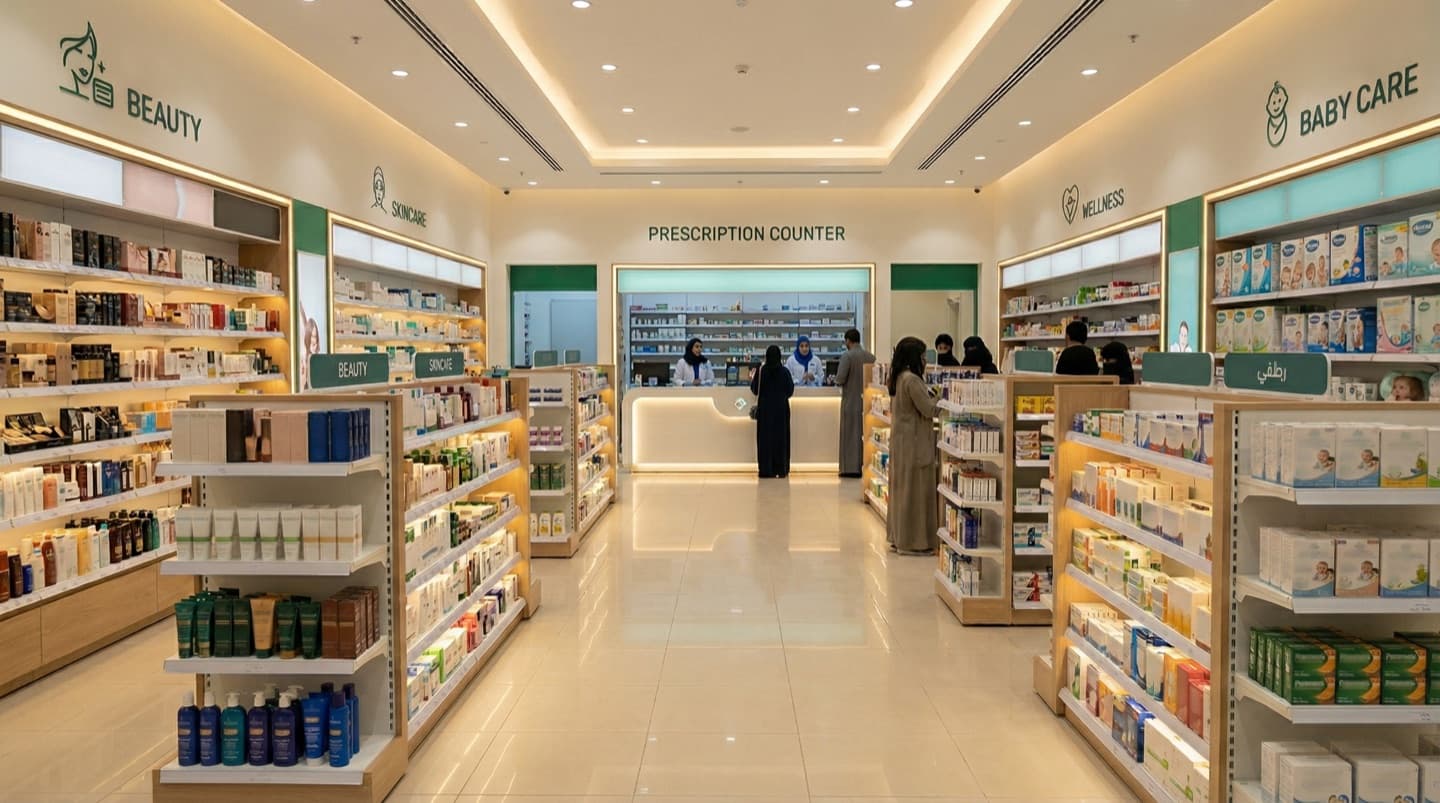
Outside the doctor’s office, much of the job happens in the pharmacy. A prescription that the pharmacy cannot fill is a lost patient, so reps check availability, talk to the pharmacist about the product, and feed stock problems back to the company. In the Gulf, where large pharmacy chains control a growing share of the market, that pharmacy work has become a discipline of its own; the guide to pharmacy channel management in Saudi Arabia covers how brand and field teams work with chains.
A day in the life of a medical representative
No two companies run the day the same way, but a typical primary care day in a Gulf city looks something like this:
| Time of day | What the rep is doing | Why it matters |
|---|---|---|
| Early morning | Review the day’s call plan in the CRM, read notes from the last visit to each doctor, pick the message and the question for each call | Pre-call planning is the cheapest way to improve call quality |
| Morning clinic hours | Calls on doctors in private clinics or hospital outpatient departments, often waiting between patients | The main promotional work of the day |
| Midday | Pharmacy calls: stock checks, pharmacist detailing, information on new packs or availability | Turns prescriptions into dispensed medicine |
| Afternoon | Call reporting, follow-up on information requests, sample records, any side-effect reports passed on the same day | Records are both a management tool and a compliance requirement |
| Evening clinic hours | A second round of calls; in the Gulf many private clinics run their busiest sessions in the evening | Reaches doctors who are unavailable in the morning |
| Some evenings | A small medical meeting or round-table with an approved speaker, organised under the promotional code | Scientific exchange with several doctors at once |
Hospital reps spend more of their time on account work: understanding the formulary process, meeting heads of department and hospital pharmacists, and following tenders. Specialty reps see fewer doctors, but each conversation goes deeper into the clinical evidence.
What Are the Duties of a Medical Representative?
Short answer: the duties fall into five groups: promote the products to the target customers with approved information; plan and cover the territory; keep accurate records; comply with the label and the promotional code; and report safety information and market intelligence back to the company.
A typical job description lists many more lines, but they all fit into these five groups:
- Promotion and education. Deliver the approved key messages for the assigned products, use only approved detail aids and leave-behinds, answer questions accurately, and refer questions outside the label to the medical department instead of answering them.
- Territory management. Build and maintain the target list, segment doctors by potential, plan routes and call cycles, and reach the agreed coverage and frequency for each segment.
- Records and reporting. Record every call, sample and meeting in the CRM on the day, keep expense and sample records clean, and report on competitor activity and market changes.
- Compliance. Follow the local code of promotional practice on gifts, hospitality, samples and meetings, carry the SPC, and never promote off-label use.
- Safety and quality. Pass any adverse event or product complaint to pharmacovigilance or quality within the company’s deadline, however it reaches the rep.
Pharmacy-facing reps add merchandising and stock duties: checking facings, making sure promotional material is approved and in date, and working with the chain’s category plans. Senior reps often add coaching new colleagues and acting as the field voice in brand planning.
Medical Representative vs Pharmaceutical Sales Rep vs MSL
Short answer: “medical representative” and “pharmaceutical sales representative” usually describe the same promotional field job under different regional names. A medical science liaison (MSL) is a different role: a non-promotional scientific expert in the medical department who exchanges scientific information with leading specialists and is not measured on sales.
| Dimension | Medical representative | Pharmaceutical sales rep | Medical science liaison (MSL) |
|---|---|---|---|
| Where the title is common | Middle East, Africa, South Asia, much of Europe | United States and companies using US terminology | Worldwide |
| Department | Sales or commercial | Sales or commercial | Medical affairs |
| Purpose | Promote approved products to healthcare professionals | Promote approved products to healthcare professionals | Scientific exchange; non-promotional |
| Main customers | GPs, specialists, pharmacists, hospitals | GPs, specialists, pharmacists, hospitals | Key opinion leaders, investigators, medical societies |
| Typical background | Science or health degree; in Saudi Arabia a licensed pharmacist | Varies; science degree preferred by many companies | Usually a doctorate-level degree (PharmD, MD, PhD) |
| Can discuss off-label data? | No; refers the question to medical | No; refers the question to medical | Only in response to an unsolicited request, under company rules |
| How performance is judged | Coverage, frequency, call quality, sales | Coverage, frequency, call quality, sales | Quality of scientific engagement and insights; not sales |
One practical consequence: a medical representative who wants to move into medical affairs has to change how they think as much as what they know. The MSL is not a senior rep; the separation between the promotional and the scientific functions is deliberate, and companies protect it.
What Are the Requirements to Become a Medical Representative?
Short answer: most companies ask for a science or health degree, good communication in the local language and English, a driving licence, and the willingness to travel within a territory. Some countries add formal requirements: in Saudi Arabia, reps who visit healthcare practitioners must be licensed Saudi pharmacists; in the UK, reps must pass the ABPI examination within two years of starting.
Requirements come from three layers, and it helps to separate them.
Legal and regulatory requirements
- Saudi Arabia. Article 10-1 of SFDA’s Saudi Code of Conduct for Promotional Practices requires representatives who visit healthcare practitioners, pharmacies and hospitals to promote pharmaceutical products, contracted ones included, to be licensed Saudi pharmacists who are trained and know the regulations. The full rule set is summarised in the SFDA marketing compliance checklist.
- United Kingdom. The ABPI Code of Practice for the Pharmaceutical Industry requires representatives to pass the ABPI Representatives Examination, normally within two years of starting the role.
- Other markets. Many countries have no licence for reps as such but regulate what they do through a national code, often based on the IFPMA Code of Practice; some require reps to register with health authorities or carry company identification. Check the local code before you apply.
Company requirements
On top of the law, companies set their own entry bar. Specialty and hospital roles usually ask for previous rep experience. Primary care roles are the usual entry point for graduates. A clean driving record matters because most reps drive every day.
Requirements and skills checklist
Use this checklist to judge your readiness, or as a hiring scorecard if you manage a team.
| Area | What good looks like | How to build it before you apply |
|---|---|---|
| Education | A science or health degree that matches local rules (pharmacy in Saudi Arabia) | Check the national code and the job adverts in your market |
| Scientific knowledge | Can explain a disease, its treatment options and where a product fits, in plain words | Study one therapy area in depth: guidelines, main drug classes, common patient types |
| Communication | Asks before telling; clear, short, confident in the local language and English | Practise two-minute explanations; record yourself and cut the filler |
| Selling skills | Can open, probe, present one benefit, handle an objection and close for a next step | Read one structured selling model and role-play it with a friend |
| Planning and self-discipline | Works unsupervised to a weekly plan; reports on time | Show examples of self-managed work from study or previous jobs |
| Resilience | Handles long waits and refusals without losing quality on the next call | Any customer-facing job counts as evidence |
| Integrity and compliance | Knows the gift, sample and off-label rules and keeps to them under target pressure | Read your market’s promotional code before the interview |
| Digital fluency | Uses CRM, runs a remote call, sends approved emails correctly | Practise video calls with screen sharing; learn basic CRM concepts |
How to Become a Medical Representative
Short answer: meet your country’s education and licensing rules, learn one therapy area well, prepare for a role-play interview, apply for primary care roles first, and expect a structured induction before you go to the field. The first year is about coverage, product knowledge and call discipline; results follow from those.
A practical sequence that works for most candidates:
- Check the rules in your market. In Saudi Arabia that means a pharmacy degree and a valid professional licence. Elsewhere, find the national code and see whether it sets an exam or registration.
- Choose a therapy area and learn it. Interviewers rarely expect product knowledge, but they notice a candidate who can talk sensibly about diabetes, hypertension or respiratory care and the patients behind them.
- Learn the call structure. Almost every interview for a rep role includes a role-play: you sell an object or a product to the interviewer playing a doctor. They are watching whether you ask questions before presenting, whether you handle the objection, and whether you ask for a commitment.
- Read the promotional code. Being able to say, in the interview, what a rep may and may not give a doctor is a strong signal of judgement.
- Apply widely, starting with primary care. Local manufacturers, multinationals and distributors with their own field teams all hire reps. Contract sales organisations are another entry route.
- Use the induction well. Most companies run initial product and skills training before a new rep goes to the field, then field coaching with the manager. What a good programme covers is set out in the guide to pharmaceutical sales rep training.
- Plan your first three months. New reps who arrive with a plan for learning the territory, meeting key customers and building habits settle faster. A week-by-week version is in the 30-60-90 day plan for a new medical rep.
What Skills Make a Medical Representative Successful?
Short answer: the reps who do well combine credible scientific knowledge with disciplined call skills and territory planning. They ask more than they tell, focus each call on one message, follow up on every promise, and keep strictly to the rules even under target pressure.
In my experience, these are the skills that separate a good rep from an average one, roughly in the order a new rep should work on them:
- Clinical credibility. The doctor decides in the first minute whether the rep is worth listening to. Knowing the disease, the guidelines and the product’s place in therapy earns that minute.
- Questioning. The best message is useless if it is about the wrong patient. Two good questions about the doctor’s patients tell the rep which message to use.
- Focus. One message per product per call, linked to what the doctor said, repeated over several visits until it sticks.
- Objection handling. Most objections are about price, habit or a concern over side effects. A rep who acknowledges the concern, checks it and answers it with approved data turns objections into the most useful part of the call.
- Territory planning. Seeing the right doctors at the right frequency matters more than any single great call.
- Follow-through. Bringing the promised study, closing a pharmacy stock problem, answering the information request: small promises kept build the relationship.
- Omnichannel habits. Running a remote call that feels like a conversation, sending the right approved email after a visit, and reading the CRM signals before the next call. The guide to HCP digital engagement covers these channels from the brand side.
FreeScore your brand plan before management does. Send me the scorecard
What Is the Career Path for a Medical Representative?
Short answer: most careers start as a primary care medical representative, move to senior or specialty rep, then to key account manager. From there the main routes are first-line sales management or a move into marketing as a product manager, with medical affairs, training, market access and sales excellence as other options.
| Stage | What changes | What gets you to the next step |
|---|---|---|
| Medical representative (primary care) | Learn the products, the territory and the call; high call volume | Consistent coverage, clean records, steady results, good coaching reports |
| Senior or specialty representative | Fewer, more specialised customers; deeper clinical discussion | Depth in one therapy area; respected by specialists |
| Key account manager (KAM) | Manages hospitals, groups or pharmacy chains as accounts; works with formularies, tenders, contracts | Business planning, negotiation, cross-functional work |
| First-line manager (district or area manager) | Leads a team of reps; coaching, field visits, targets, hiring | Proven coaching of peers; fairness and judgement under pressure |
| Product manager (marketing) | Owns a brand plan, messages and materials; works with medical and agencies | Field insight, analytical skills, written communication |
The move from field to marketing is common in the Gulf and remains one of the best routes into brand management, because the product manager who has made calls writes messages that reps can actually use. The move to first-line management rewards a different strength: making other people better at the job you used to do.
How Is a Medical Representative’s Performance Measured?
Short answer: most companies combine activity measures (call rate, coverage, frequency), quality measures (call quality from manager field visits, message recall, compliance) and outcome measures (sales in the territory, usually based on sell-out or prescription data where available, or on sell-in where it is not).
| Measure | What it means | The trap |
|---|---|---|
| Call rate | Average number of calls made per field day | Pushing the number up with short, empty calls |
| Coverage | Share of the target list seen at least once in the cycle | Seeing the easy doctors, not the high-potential ones |
| Frequency | How often each target doctor is seen versus the plan for their segment | Equal frequency for every doctor regardless of potential |
| Call quality | Manager’s assessment of a call against the company’s model during joint field visits | Scored only when the manager is present, so it can flatter |
| Sell-out or prescriptions | What actually leaves pharmacies or is prescribed in the territory | Data gaps; small territories swing for reasons the rep cannot control |
| Sell-in | What distributors or pharmacies bought from the company | Rewards loading stock that does not sell through |
The best managers read these together. A rep with high coverage and low sell-out has a message or targeting problem; a rep with strong sell-out and weak coverage may be relying on a few loyal doctors and is exposed if one of them moves. Activity measures are a means to an end; they should never become the target themselves.
What Can a Medical Representative Do, and What Is Not Allowed?
Short answer: a rep may promote registered products to healthcare professionals using approved material and approved claims, provide samples within the rules, and organise scientific meetings under the code. A rep may not promote off-label uses, offer incentives to prescribe, or exceed the limits on gifts and hospitality. In Saudi Arabia, gifts are capped at SAR 100 an item and SAR 500 per healthcare professional per year.
Every major market has a code. Internationally, the IFPMA Code of Practice sets the baseline for its member associations; in the United States, the PhRMA Code on Interactions with Health Care Professionals; in the UK, the ABPI Code of Practice. In Saudi Arabia, the reference is SFDA’s Saudi Code of Conduct for Promotional Practices of Pharmaceutical and Herbal Products. The details differ, but the logic is the same everywhere: the rep’s job is accurate information, not influence bought with value.
| A medical rep may | A medical rep may not |
|---|---|
| Promote registered products within the approved label, using material approved by the medical department | Promote unregistered products or uses outside the approved label, even when asked |
| Answer questions with approved data and refer off-label questions to medical | Share unapproved slides, reprints or personal summaries of data |
| Give non-promotional items of professional use within the limits (in Saudi Arabia: SAR 100 an item, SAR 500 per HCP per year) | Give cash, vouchers or anything convertible to cash, or any incentive linked to prescribing or dispensing |
| Provide free samples labelled and tracked as the code requires | Provide samples of narcotic or controlled medicines (prohibited in Saudi Arabia under article 6) |
| Organise scientific meetings with modest hospitality for participants | Pay for companions, leisure activities or entertainment |
| Collect and report side effects and product complaints | Ignore or delay a reported side effect because it seems minor |
Reps are often under target pressure, and most compliance problems I have seen started with a small favour that seemed harmless. The simplest rule for a new rep: if you would not be comfortable seeing the item, the meal or the claim described in a regulator’s report, do not do it.
How Is the Medical Representative Role Changing?
Short answer: the role is moving from a fixed visit schedule to a coordinated mix of face-to-face, remote and digital contact, guided by data on what each doctor prefers. AI tools are starting to help with call planning, next-best-action suggestions and call notes, while the core of the job, a credible conversation with a healthcare professional, stays human.
Four shifts matter most for anyone entering the job now:
- Remote detailing is a normal channel. Video calls and phone calls with screen sharing became common during the COVID-19 pandemic and stayed for doctors who prefer them. A remote call needs a tighter structure than a visit, because attention drops quickly on a screen.
- Omnichannel planning. Companies increasingly plan the sequence of contacts for each doctor across visits, approved emails, webinars and websites. The rep becomes the coordinator of that sequence for their customers, not only the person who visits.
- AI in the field toolkit. CRM systems now offer suggestions on which doctor to see and which message to use, and AI can draft call notes or summarise a doctor’s history before a visit. Everything a rep sends or says still has to be approved content; AI does not change the promotional code.
- Access is harder to earn. Many doctors see fewer reps than before, and hospitals restrict visits. The reps who keep access are the ones who bring something useful each time: a relevant study, a solution to a supply problem, a patient education resource.
For pharmacy-facing reps in Saudi Arabia, the change also comes from the channel itself: chains with central buying, category reviews and retail media change what a rep can influence store by store. The rep who understands how the chain decides is more useful than the one who only counts facings.
Practical Tools for Medical and Pharmacy Reps in Saudi Arabia
If you work as a rep in Saudi Arabia, or manage a team there, the Field Booklets are a set of 19 short, practical booklets for medical and pharmacy representatives, in Arabic and English, covering the situations reps face in the field. Booklet 1 is a free sample you can read before deciding whether the series is useful for you or your team.
Key Takeaways
- A medical representative gives healthcare professionals accurate, approved information about a company’s medicines, inside the label and the local promotional code
- The day is built around planned calls on doctors and pharmacies, followed by records, follow-up and side-effect reporting
- “Medical representative” and “pharmaceutical sales rep” are usually the same job; an MSL is a separate, non-promotional medical role
- Requirements vary: in Saudi Arabia reps who visit healthcare practitioners must be licensed Saudi pharmacists; in the UK reps must pass the ABPI examination
- Performance combines coverage, frequency and call quality with sell-out; activity is a means, not the goal
- In Saudi Arabia, gifts are capped at SAR 100 an item and SAR 500 per HCP per year, and incentives to prescribe are prohibited
- The role is becoming omnichannel and data-guided, but the credible conversation stays at its centre
Frequently Asked Questions
What is a medical representative?
A medical representative is a pharmaceutical company employee who visits doctors, pharmacists and other healthcare professionals to give them accurate, approved information about the company's medicines, so those professionals can decide whether and how to use them. The role sits in the commercial team, but it is regulated: what a rep says must stay inside the product's approved label and the local code of promotional practice.
What does a medical representative do every day?
Most of the day goes to planned calls on doctors and pharmacies in an assigned territory: a short, structured discussion of one or two products using approved material, followed by call notes in the company CRM. Around the calls sit planning, pharmacy stock checks, small medical meetings, follow-up on information requests, and passing any reported side effect to the company's pharmacovigilance team.
What qualifications do you need to become a medical representative?
It depends on the country. Many markets prefer or require a science or health degree such as pharmacy, medicine, dentistry, veterinary medicine, nursing or biology. In Saudi Arabia, article 10-1 of SFDA's Saudi Code of Conduct for Promotional Practices requires representatives who visit healthcare practitioners, pharmacies and hospitals to be licensed Saudi pharmacists. In the UK, the ABPI Code of Practice requires representatives to pass the ABPI examination within two years of starting the job.
Is a medical representative the same as a pharmaceutical sales rep?
In most of the world the two titles describe the same field job; companies in the Middle East, Africa and South Asia tend to say medical representative, and US companies tend to say pharmaceutical sales representative. Both are commercial roles measured on sales. A medical science liaison (MSL) is different: a non-promotional, scientific role in the medical department, usually held by someone with a doctorate-level degree.
What skills does a medical representative need?
Product and disease knowledge deep enough to answer a specialist's questions, structured call skills (opening, needs questions, a focused message, handling objections, agreeing a next step), territory planning, honest record keeping, resilience after a rejected visit, and a working knowledge of the promotional code. Increasingly, reps also need to run a good remote call and use CRM and digital tools well.
What is the career path for a medical representative?
A common path runs from medical representative to senior or specialty representative, then to key account manager for hospitals or pharmacy chains, and from there either into first-line management (district or area manager) or into the marketing department as a product manager. Some reps with strong scientific backgrounds move into medical affairs, training or market access.
Can a medical representative give gifts to doctors in Saudi Arabia?
Only within strict limits. SFDA's Saudi Code of Conduct for Promotional Practices allows non-promotional items with an office or professional use worth no more than SAR 100 each and no more than SAR 500 per healthcare professional per year, free of medical claims and never convertible to cash. Any financial or material incentive to prescribe or dispense is prohibited.
Is the medical representative job disappearing because of digital channels?
The job is changing rather than disappearing. Companies now combine face-to-face visits with remote detailing, approved emails and webinars, and use data to decide which doctor gets which channel and when. The rep who adds value in the room, knows the territory and coordinates those channels is still central; the rep who only delivers a fixed script is the one most easily replaced by a cheaper channel.
What to Do Next
If you are considering the job, read your market’s promotional code, pick one therapy area to learn properly, and practise a five-minute role-play call until you can ask two good questions before you present anything. If you have just been hired, build your first three months around the 30-60-90 day plan. If you manage reps, compare your current induction with the structure in the guide to pharmaceutical sales rep training and close the gaps before your next hire starts.