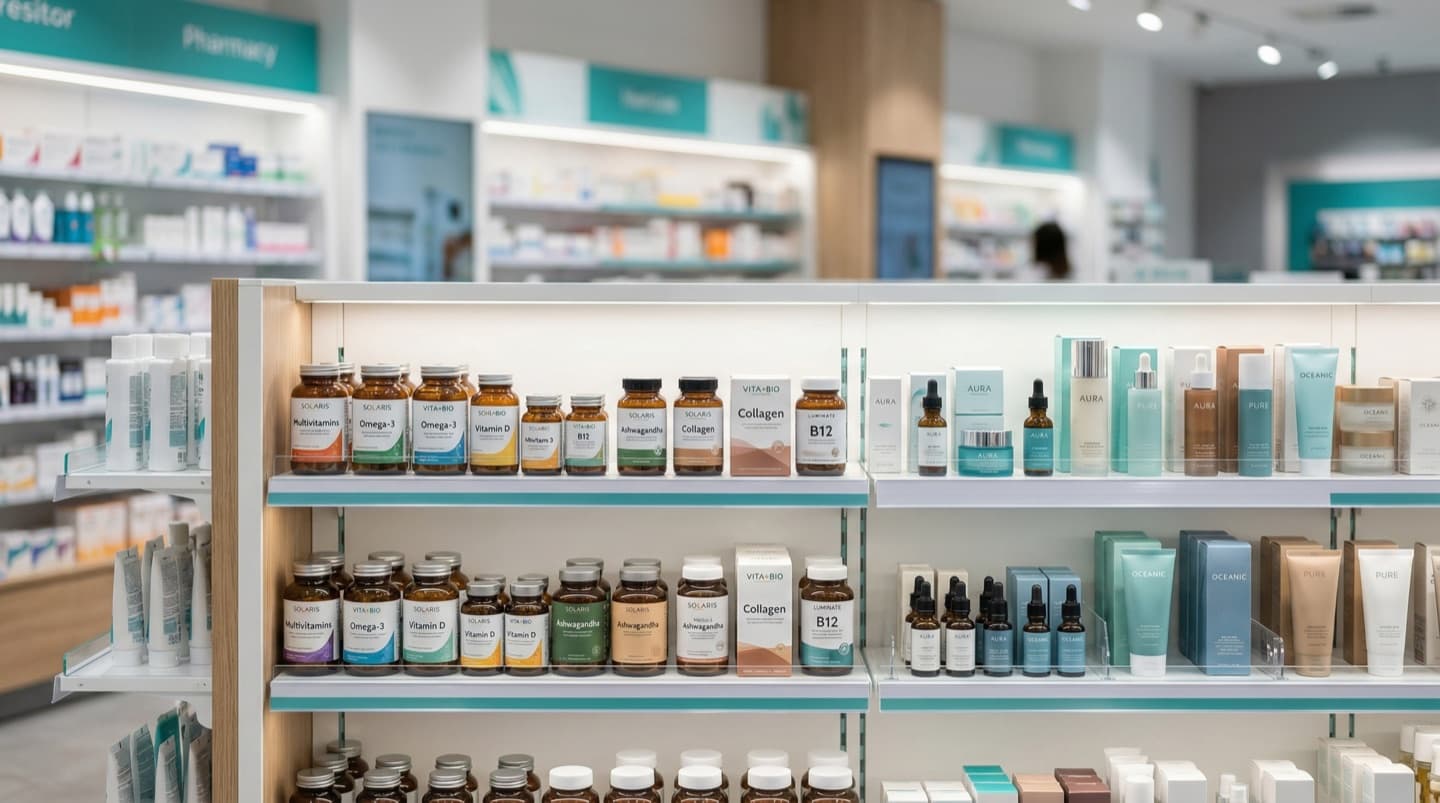
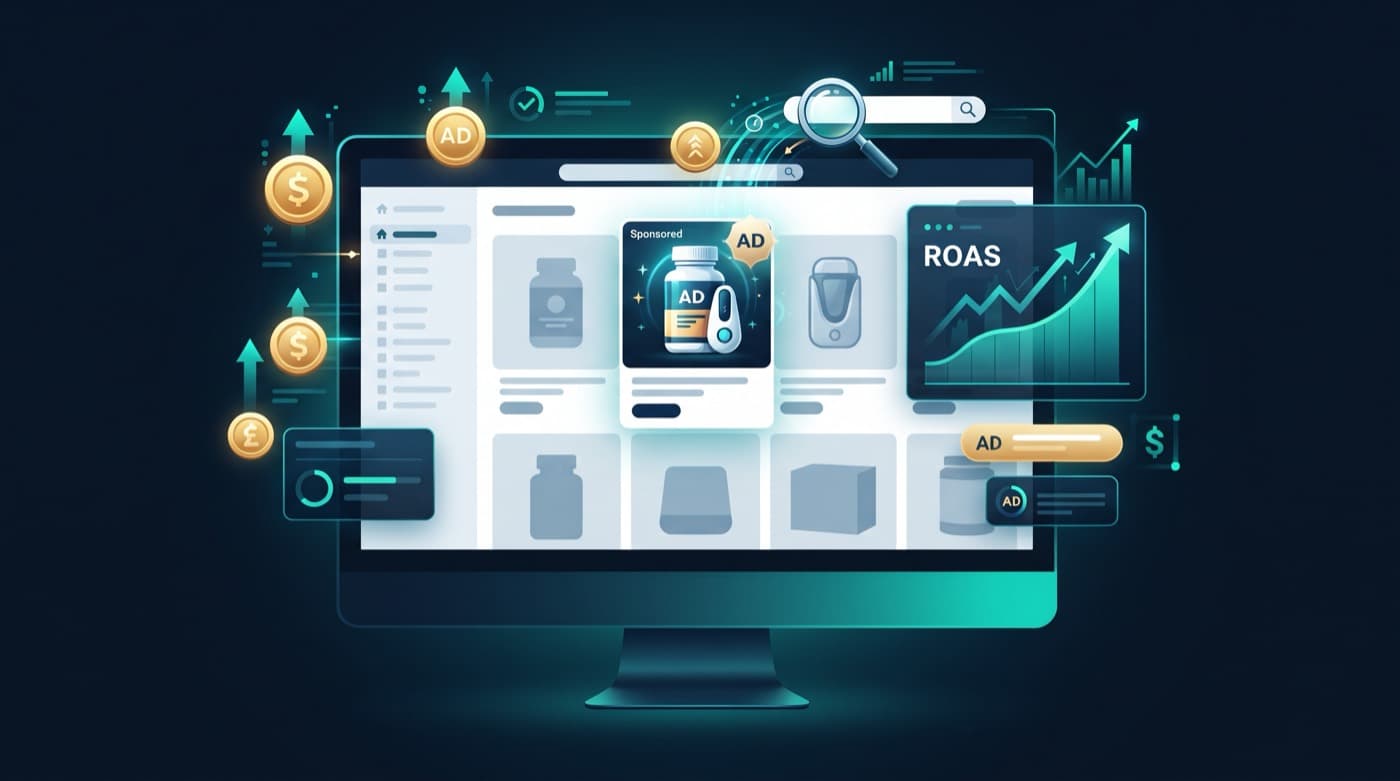
Retail media is advertising you buy inside a retailer’s own ecosystem — sponsored search placements, display banners, and app takeovers on platforms like Amazon.sa, Noon, Nahdi Online and the Al-Dawaa app — targeted with the retailer’s first-party shopper data and measured against actual sales. It is the fastest-growing line in consumer healthcare digital budgets in Saudi Arabia for one simple reason: it sits at the exact moment of purchase. The shopper has opened a pharmacy app or typed a search into Amazon.sa, wallet effectively in hand, and the brand that owns that search result wins the sale. Shelf position — the thing we spent decades negotiating in physical pharmacies — is now bought in an auction, in real time, every day.
I have spent over 20 years in pharmaceutical and consumer healthcare marketing across KSA and the GCC, working on more than 80 CHC brands — from OTC analgesics and vitamins to dermocosmetics and oral care. Over the last three years, I have watched retail media move from a curiosity line in e-commerce plans to the single biggest source of budget conflict, wasted spend, and — for the brands that get it right — profitable share gain. I have built Sponsored Products campaigns on Amazon.sa from zero, negotiated onsite packages with pharmacy retailers inside JBP discussions, and audited accounts where half the reported ROAS was an illusion.
This guide is everything I have learned about winning retail media for consumer healthcare in Saudi Arabia: the platform landscape, the category rules that decide what you can even advertise, the Arabic-English keyword battlefield, campaign architecture, realistic CPC benchmarks, honest measurement, and the negotiation dynamics now playing out inside Nahdi and Al-Dawaa joint business plans.
25–35%
Share of CHC digital budgets now flowing to retail media in KSA
SAR 1.5–4.5
Typical CPC range for generic CHC category keywords on Amazon.sa
60%+
Share of health product searches in KSA conducted in Arabic
4–6×
Healthy blended ROAS benchmark for an established CHC brand
What Is Retail Media — and Why Is It Taking Over CHC Budgets?
For readers who came up through classic pharma marketing: retail media is the digital descendant of the gondola-end fee, the shelf-talker, and the pharmacy window display — except it is auction-priced, data-targeted, and measurable to the transaction. Instead of paying Nahdi for an end-cap in 500 stores and hoping, you pay for your product to appear first when a shopper searches “vitamin d” in the app, and you see exactly how many units that placement sold.
Three structural forces explain why this line is growing faster than any other in CHC digital plans across the Kingdom — and why, as I argued in my broader guide to e-commerce for consumer healthcare in the GCC, brands that treat online as an afterthought are structurally losing share.
1. It Is Bottom-of-Funnel Money
Most media spend works on people who might buy something someday. Retail media works on people who are buying something right now. A shopper searching “sunscreen for oily skin” on Amazon.sa or browsing the pain relief category in the Nahdi app is minutes from a transaction. The conversion rates reflect this: retail media clicks for CHC products convert at 8–15% in my campaigns, versus 1–3% for the same products from paid social traffic. When finance asks which digital line has the clearest link to revenue, retail media is the only honest answer.
2. Closed-Loop Measurement
Because the retailer owns both the ad impression and the checkout, retail media closes the loop that has haunted pharma marketing forever: did the ad actually sell anything? Amazon.sa attributes sales to the specific keyword and campaign that drove them. Nahdi can report campaign-attributed units from its own transaction data. No modeled attribution, no survey-based brand lift proxies — actual receipts. That measurability is precisely why CFOs approve retail media budgets faster than any other digital line, and also why (as we will see later) its measurement flatters itself in ways you must correct for.
3. The Digital Shelf Is Now a Paid Shelf
Here is the uncomfortable truth: on Amazon.sa, sponsored placements now occupy most of the first screen of a mobile search result. The same pattern is spreading across Noon and the pharmacy apps. Organic rank still matters enormously — it compounds and it is free — but the top of the digital shelf is, functionally, bought. A brand that refuses to participate is choosing the digital equivalent of the bottom shelf in aisle nine. In categories like VMS and dermocosmetics, where three or four multinationals bid aggressively, the choice is stark: pay to play, or watch your share of search erode quarter after quarter.
Actionable takeaway: Pull your last quarter’s digital budget and calculate what percentage went to retail media versus social and display. If retail media is under 20% of your CHC digital spend in KSA and your category sells meaningfully online, your money is sitting too high in the funnel. Rebalance before your next planning cycle.
The KSA Retail Media Landscape: Who Sells What?
The Saudi retail media ecosystem for consumer healthcare has four distinct tiers, each with different inventory, targeting sophistication, and commercial models. Mapping them properly is the first strategic step, because the right mix depends heavily on your category — an OTC brand and a dermocosmetic brand should build very different plans.
Amazon.sa: The Full Ad Stack
Amazon.sa offers the most complete and mature retail media toolkit in the Kingdom, essentially mirroring the global Amazon Ads stack:
- Sponsored Products: Keyword- and product-targeted ads that appear inside search results and on product pages. This is the workhorse — typically 60–70% of a CHC brand’s Amazon spend — with cost-per-click pricing and sales-attributed reporting.
- Sponsored Brands: Banner placements at the top of search results featuring your logo, a custom headline, and multiple products. Excellent for defending branded searches and for introducing a range (a full skincare routine, a vitamin line) rather than a single SKU.
- Sponsored Display: Audience-targeted display ads that follow shoppers on and off Amazon — retargeting people who viewed your product page but did not buy, or targeting viewers of competitor pages.
- Amazon DSP: Programmatic buying of display and video inventory using Amazon’s shopper data, on and off the platform. This is where bigger CHC brands run category-in-market audiences (“shoppers who browsed infant formula in the last 30 days”) at scale. Requires meaningful minimum budgets and usually an agency or managed service.
Noon: The Volume Challenger
Noon’s ad platform offers sponsored search and display placements across its KSA and UAE storefronts. The tooling is less mature than Amazon’s — keyword controls are coarser, reporting is thinner — but auctions are noticeably cheaper, and Noon’s promotion-driven shopper base responds strongly to deal-plus-ad combinations. For price-fighter brands and volume categories (oral care, personal hygiene, mainstream VMS), Noon delivers some of the best cost-per-acquisition numbers in the market when a sponsored placement is paired with a visible discount or bundle.
Nahdi Online and Al-Dawaa: The Pharmacy Powerhouses
This is the tier most global playbooks miss, and in consumer healthcare it is arguably the most important. Nahdi and Al-Dawaa have both built onsite monetization programs: sponsored placements in app search results, category page banners, homepage takeovers, push notification campaigns to loyalty members, and featured placement in seasonal health campaigns (Ramadan immunity, back-to-school, winter cold and flu). Their targeting draws on pharmacy loyalty data — purchase history at the category and brand level across millions of members — which for health products is richer intent data than anything Amazon holds.
The commercial model is different, though. Instead of a self-serve auction, most of this inventory is sold as packages — monthly or campaign-based sponsorships negotiated with the trade team, often inside the annual JBP. That changes who buys it, how it is priced, and how you should negotiate it, which I cover in detail later in this article.
Quick-Commerce and Offsite: The Emerging Tier
Two newer inventory types deserve a line in your 2026 plan. First, quick-commerce apps — Nana, the rapid-delivery arms of the pharmacy chains, and Toters-style last-mile players — are beginning to monetize search and category placements. Baskets are urgent and small (pain relief, fever management, baby essentials at 11pm), which makes placement ownership disproportionately valuable for acute-need OTC and baby care. Second, offsite retail media: campaigns on Meta, TikTok or Snap that are targeted using the retailer’s audience data and closed-loop measured against the retailer’s sales. Amazon DSP already does this; Nahdi has begun offering retailer-data-targeted social packages. Offsite extends retail media’s measurability up the funnel — useful, but only after your onsite foundation is solid.
| Platform | Ad Products | Targeting Data | Buying Model | Best For |
|---|---|---|---|---|
| Amazon.sa | Sponsored Products / Brands / Display, DSP | Search intent + browsing + purchase history | Self-serve auction (DSP: managed) | VMS, dermocosmetics, devices, oral care |
| Noon | Sponsored search, display banners | Search intent + promo-responsive segments | Self-serve auction + packages | Volume categories, deal-driven launches |
| Nahdi Online | Onsite search, banners, app takeovers, push, seasonal campaigns | Pharmacy loyalty purchase data | Negotiated packages (often via JBP) | OTC, chronic-use CHC, full portfolio visibility |
| Al-Dawaa App | Onsite search, category banners, loyalty offers | Loyalty program purchase data | Negotiated packages (often via JBP) | Repeat-purchase OTC, chronic categories |
| Quick-commerce (Nana, etc.) | Search placement, category sponsorship | Basket + location + urgency signals | Packages, early-stage pricing | Acute OTC, baby care, urgent-need SKUs |
| Offsite retail media | Retailer-data-targeted social/display/video | Retailer first-party audiences | Managed / DSP | Category recruitment with closed-loop proof |
Budget Benchmark
Where the Money Should Go — Retail Media Budget Split for a CHC Brand in KSA
Indicative allocation for an established multi-SKU CHC brand — adjust for category eligibility (OTC skews to pharmacy apps) and brand maturity
Actionable takeaway: Map your portfolio against this landscape before you spend a riyal. For each priority SKU, write down which platforms can legally carry it, which already list it, and which placement type fits its purchase pattern — search-driven considered purchase (Amazon Sponsored Products), impulse and deal (Noon), or repeat pharmacy purchase (Nahdi and Al-Dawaa loyalty placements).
What Can You Actually Advertise? Category Rules for Health
Retail media for consumer healthcare comes with a compliance layer that consumer goods marketers never deal with. Two rule sets stack on top of each other: SFDA regulations that determine where a product category can be sold and what can be claimed about it, and each platform’s own restricted-category policies, which are often stricter than the law requires. Getting this wrong does not just waste budget — rejected ads and pulled listings damage account health and can trigger wider compliance reviews of your catalog.
The Platform Eligibility Matrix
| Category | Amazon.sa / Noon Ads | Nahdi / Al-Dawaa Onsite | Key Restriction Notes |
|---|---|---|---|
| OTC medicines | Restricted — generally not advertisable | Yes (licensed e-pharmacy) | Pharmacy apps are the retail media home for OTC; SFDA ad rules apply to creative |
| Vitamins & supplements | Yes, with claim restrictions | Yes | No disease treatment or cure claims; structure-function wording only |
| Dermocosmetics | Yes | Yes | Cosmetic claims only; clinical language needs substantiation on the PDP |
| Oral care | Yes | Yes | Therapeutic variants may be classified as pharmaceutical — check registration |
| Medical devices (Class I) | Yes, with conditions | Yes | Registration required; performance claims must match approved labeling |
| Baby & infant care | Yes (formula stage rules apply) | Yes | Stage 1 infant formula promotion is restricted — take specialist advice |
| Sexual wellness | Restricted / limited placements | Limited | Platform-specific policies vary; expect manual review of all creative |
Claims Discipline: The Ad Is Judged With the PDP
A detail that surprises many brand teams: compliance reviewers and platform moderators do not evaluate your ad creative in isolation. The ad, the product title, the bullet points, the images, and the A+ content are assessed as one promotional unit. A perfectly compliant Sponsored Products ad pointing to a product page that says “treats eczema” on a cosmetic-registered cream is a violation. My rule: run every PDP through the same regulatory review you would apply to a print ad, before you put a single riyal of media behind it. Build a product-by-product eligibility and claims matrix with your regulatory team — category, registration status, permitted claims, platform eligibility — and make it the gatekeeper document for every campaign brief.
Actionable takeaway: Before your next campaign, audit your top 10 advertised PDPs against their SFDA registration class. Flag any medical or therapeutic language on cosmetic-registered or supplement-registered products. Fix the pages first — then advertise. This single discipline prevents the most expensive category of retail media failure in KSA.
The Search-Term Battlefield: Arabic, English and In Between
Keyword strategy is where KSA retail media genuinely differs from every global playbook, because Saudi shoppers search in three modes for the same product. They search in Arabic script (بنادول), in English (“panadol”), and in transliteration in both directions — Arabic brand names typed in Latin characters and English terms rendered phonetically in Arabic. A brand that only bids on English keywords is invisible to most of its actual demand: over 60% of health product searches in the Kingdom are conducted in Arabic.
The Three-Layer Keyword Model
- Layer 1 — Arabic script: Brand names, category terms (فيتامين د for vitamin D), and symptom searches (مسكن ألم for pain relief). Highest volume, lowest competition, cheapest clicks. This is where the arbitrage lives: Arabic keywords still price 20–40% below their English equivalents for identical intent, because regional teams keep planning campaigns in English.
- Layer 2 — English: Standard category and brand terms. Most competitive auctions, because every multinational bids here by default. Necessary, but should rarely be the majority of your keyword portfolio.
- Layer 3 — Transliterations and misspellings: “banadol,” “fitamin,” Arabic-script renderings of English brand names, and common phonetic variants. Individually small, collectively meaningful — and almost nobody bids on them, so they convert at bargain CPCs.
How to Build the Keyword Set
Do not translate your English keyword list — harvest real search behavior. The three sources I use: platform search-term reports from automatic campaigns (run an auto campaign for two weeks and mine what shoppers actually typed), the search autocomplete on Amazon.sa, Noon and the Nahdi app in both languages, and your pharmacy call-center and social inbox, which reveal how consumers genuinely phrase symptoms in Saudi dialect. A native Arabic speaker on the campaign team is not optional; machine-translated keyword lists routinely miss the dialect forms that carry the volume.
One warning from experience: negative keywords matter as much in Arabic as in English. Broad-match Arabic terms will pull in prescription-adjacent searches you must not appear against, and irrelevant symptom queries that burn budget. Review search-term reports weekly for the first two months of any Arabic campaign.
Actionable takeaway: Export your current keyword list and count the Arabic terms. If Arabic is less than 40% of your portfolio, you are overpaying for English auctions while your cheapest, highest-volume demand goes to whichever competitor localized first. Build the three-layer set this month.
How Should a CHC Brand Structure Its Campaigns?
Campaign architecture is where discipline pays. The mistake I see most often in KSA accounts is one bloated campaign mixing branded terms, generic terms, and competitor terms — which makes the blended ROAS meaningless and hides where money is actually working. I structure every CHC account into four layers, each with its own budget, bid logic, and success metric. One prerequisite for the competitor layers: know who is actually entering your category. RaqibHealth tracks new SFDA registrations and launches across KSA, so a new rival shows up on your conquest keyword list before it shows up in your sales data.
Layer 1: Branded Defense
Bidding on your own brand names in both scripts. It feels like paying for traffic you already own — and partly it is — but in contested categories it is non-negotiable, because if you do not own your branded search results, a competitor will. The test: search your brand on Amazon.sa and the Nahdi app today. If a competitor’s sponsored placement appears above your product, you are leaking your own demand. Branded defense is cheap (SAR 0.40–1.50 CPC), converts at the highest rates in the account, and should run always-on at roughly 15–20% of budget.
Layer 2: Generic Category Terms
The core growth engine: “collagen,” “sunscreen spf 50,” مكملات غذائية (dietary supplements), symptom and need-state searches. This is where you recruit shoppers who have a need but no brand decision, and it deserves the largest share of spend — typically 45–55%. Expect materially higher CPCs and lower conversion than branded terms; judge this layer on new-to-brand orders and category share of search, not on the same ROAS bar as branded defense.
Layer 3: Competitor Conquesting — Ethics and Effectiveness
Bidding on competitor brand names and targeting their product pages. First, the ethics: conquesting is legal and platform-sanctioned, and in my view legitimate in CHC when your ad is honest — you are presenting an alternative at a moment of comparison, not impersonating anyone. Where I draw the line: never use a competitor’s trademark in your ad copy, never imply equivalence you cannot substantiate, and never conquest on safety-sensitive searches (a parent searching a specific infant product is not the moment for interception). In a market where your conquest target may also be your negotiating counterpart’s biggest supplier, reputational judgment matters as much as policy.
Second, the effectiveness math, which is less flattering than agencies suggest: conquest CPCs run two to three times category averages while conversion rates run at roughly half, because health brand loyalty is sticky. Conquesting earns its 10–15% budget share only when you have a genuine switching argument — better price-per-dose, a superior format (gummies versus tablets, effervescent versus capsule), or a differentiated claim you can legally make. Without one, it is expensive noise.
Layer 4: ASIN and PDP Targeting
Product-page targeting — placing your ad on specific product detail pages, including your own. Three high-value plays: complementary cross-sell (your vitamin C serum advertised on your own cleanser’s page), defensive placement on your own PDPs so competitors cannot occupy them, and precision conquest on competitor PDPs where you hold a clear price or review advantage. This layer is small (10–15% of budget) but has the best targeting precision in the stack.
| Campaign Layer | Objective | Budget Share | Primary KPI | Typical CPC (SAR) |
|---|---|---|---|---|
| Branded defense | Protect owned demand | 15–20% | Impression share on branded terms (>90%) | 0.40–1.50 |
| Generic category | Recruit new shoppers | 45–55% | New-to-brand orders, share of search | 1.50–4.50 |
| Competitor conquest | Switch at moment of comparison | 10–15% | Conversion rate vs. account average | 3.00–8.00 |
| ASIN / PDP targeting | Cross-sell + defend + precision conquest | 10–15% | Attached-basket rate, PDP defense share | 1.00–3.50 |
The PDP-First Rule: Never Buy Traffic to a Weak Page
If I could enforce one policy in every CHC organization in the Kingdom, it would be this: no paid retail media traffic to any product page that would not convert a skeptical pharmacist’s spouse. Advertising multiplies whatever your product page already is. A strong page turns paid clicks into sales and organic rank; a weak page turns them into funded browsing for your competitors — the shopper clicks your ad, distrusts your three-photo listing with its 3.6 stars, and buys the better-presented alternative two scrolls down. You paid for that comparison.
My minimum thresholds before a SKU earns media budget:
- Rating: 4.0 stars or above, with at least 15–20 reviews. Below that, invest in review generation (Vine, post-purchase flows, insert cards where permitted) before advertising.
- Content: Full bilingual title and bullets, six or more images including usage and benefit visuals, and A+ content live. On pharmacy platforms, complete and accurate product information fields.
- Compliance: Claims on the page match the product’s SFDA registration class (see the category rules above).
- Availability and price: In stock with healthy cover, buy box owned (on Amazon), and price within your agreed parity corridor — advertising an out-of-stock or buy-box-lost SKU is pure waste.
I covered the full playbook for titles, image stacks, A+ content and bilingual keyword optimization in my guide to winning the digital shelf for consumer healthcare products — treat that work as the prerequisite for everything in this article. The sequencing is absolute: content first, reviews second, media third.
Actionable takeaway: Score every SKU in your current campaigns against the four thresholds above. Pause media on any SKU that fails two or more, redirect that budget to your strongest pages, and fix the weak PDPs before they earn their budget back. In most accounts I audit, this single reallocation improves blended ROAS by 20–30% in a month.
Budgeting and Bids: What Does a Click Really Cost in KSA?
Budget conversations fail without realistic unit economics, so here are the CPC ranges I actually see across KSA consumer healthcare auctions in 2026. Treat them as planning corridors, not guarantees — auctions move with seasonality (Ramadan and White Friday inflate everything 30–50%), competitive intensity, and your own quality signals.
| Category | Branded CPC (SAR) | Generic CPC (SAR) | Conquest CPC (SAR) | Notes |
|---|---|---|---|---|
| Vitamins & supplements | 0.50–1.50 | 2.00–4.50 | 4.00–8.00 | Most crowded auction in KSA CHC; Arabic terms notably cheaper |
| Dermocosmetics / skincare | 0.60–1.50 | 2.00–6.00 | 4.00–8.00 | Premium brands push top-end CPCs; strong A+ content lifts quality scores |
| OTC (pharmacy platforms) | Package-priced | Package-priced | Rare / negotiated | Nahdi and Al-Dawaa sell placements as packages, not open auctions |
| Oral care | 0.40–1.00 | 0.80–2.50 | 2.00–5.00 | Lower intensity; strong ground for challenger brands |
| Baby care | 0.50–1.20 | 1.20–3.50 | 3.00–6.00 | High loyalty makes conquest hard; defense is critical |
| Personal care / hygiene | 0.40–1.00 | 0.80–2.20 | 2.00–4.50 | Cheapest clicks; margin discipline matters more than CPC |
Sizing the Budget
Two sizing methods work in practice. For established brands, budget retail media as a percentage of platform GMV: 8–12% of marketplace revenue is a sustainable corridor for a brand defending share, rising to 15–20% when you are pushing for rank gains. For launches, budget backward from ranking velocity instead: estimate the daily orders needed to reach page one for your target keywords (your agency or tooling can approximate this), multiply by expected cost per acquisition, and fund 90 days of it. Launch math almost always looks ugly — ROAS of 1.5–3 — because you are buying position, and position pays back through organic sales later. Budgeting a launch to a mature brand’s ROAS target is how launches quietly fail.
Bid Strategy That Survives Contact With the Auction
- Start manual, not automatic: Run automatic campaigns only as keyword-harvesting tools at low budgets. Your money belongs in manual campaigns where you control match types and bids per layer.
- Bid to position on defense, to CPA on generics: Branded terms are about impression share — pay what it takes to hold above 90%. Generic terms are about unit economics — set bids from your target cost per acquisition and let position land where it lands.
- Dayparting matters in KSA: Health shopping peaks late evening (9pm–1am). If your budget caps out by afternoon, you are absent at the highest-converting hours. Cap morning spend or raise budgets before you raise bids.
- Plan seasonal war chests: Hold 20–25% of annual budget in reserve for Ramadan, back-to-school and White Friday, when both traffic and CPCs spike. Entering peak season on a flat monthly budget means losing exactly when the category is largest.
Measurement: Why ROAS Is Not the Whole Truth
Retail media’s greatest strength — closed-loop measurement — is also its greatest trap, because the loop is closed by the party selling you the media. Three corrections turn platform reporting into honest management information.
ROAS vs. Incrementality
Incrementality is the share of ad-attributed sales that would not have happened without the ad. Platform ROAS claims every attributed sale, including the loyal customer who searched your brand name, saw your defensive ad, and bought exactly what they came to buy. That sale is real; the ad’s contribution to it is mostly not. Branded campaigns routinely report ROAS of 15–25 while their true incremental contribution is a fraction of that; generic and conquest campaigns report modest ROAS while driving most of the genuinely new business. If you optimize the account purely to reported ROAS, the algorithm will happily shift your budget toward claiming sales you already owned. Practical incrementality checks that do not require a data science team: pause branded ads in one comparable city or week and measure the actual sales dip; track new-to-brand order percentage as a standard KPI; and watch total sales (organic plus paid) rather than paid-attributed sales alone.
The Sell-In Trap
A distortion specific to our industry: on pharmacy platforms, campaign “success” can show up as the retailer ordering more stock rather than consumers buying more product. Your Nahdi campaign runs, the category manager sees momentum, sell-in jumps, and the campaign review deck declares victory — while actual sell-out barely moved and the surplus sits in the retailer’s DC, waiting to come back at you as a returns claim or a margin support demand two quarters later. Anyone who has managed KSA pharmacy accounts has lived this movie in its offline version. The discipline: always evaluate retail media campaigns on sell-out data — units through the till or the app checkout — and make sell-out data access a condition of every retail media package you buy from a pharmacy retailer.
The KPIs That Belong on the Dashboard
- Share of search: The percentage of first-page results (paid plus organic) your brand holds for your priority keyword set, tracked weekly in both languages. This is the digital shelf’s share-of-shelf metric and the best leading indicator of share movement I know.
- New-to-brand order rate: The honest signal of recruitment, and the primary KPI for generic and conquest layers.
- Total ACOS (TACOS): Ad spend as a percentage of total (paid plus organic) platform sales. A falling TACOS with rising total sales means paid activity is building organic equity — the whole point.
- Branded impression share: Your defense-layer health check, held above 90%.
- Sell-out per campaign week: For pharmacy platform packages — units, not orders placed by the retailer.
Actionable takeaway: Rebuild your retail media report around three questions: How much of our paid-attributed revenue is genuinely incremental? Is our share of search growing on the keywords that matter? Is sell-out — not sell-in — moving? Any agency or platform report that cannot answer those three is a billing document, not a measurement framework.
Retail Media Meets the JBP: The New Nahdi and Al-Dawaa Negotiation
The most consequential shift of the last two years is commercial, not technical: retail media has entered the joint business plan. Nahdi and Al-Dawaa now arrive at annual negotiations with media kits alongside their trade terms — asking suppliers for committed retail media co-investment, often framed as 1–3% of expected sell-in, on top of listing fees, promotional calendars and margin support. If you manage key accounts in this market, this is now part of the negotiation whether you planned for it or not. The fundamentals of that negotiation table — who holds leverage, what a JBP should contain, how the chains operate — I covered in my guide to pharmacy channel management in KSA; retail media adds a new line to that table without changing its logic.
The Trade-Marketing Budget Collision
Inside supplier organizations, this creates a genuine governance problem: which budget pays? The e-commerce team sees performance media that belongs to digital. The key account manager sees a retailer investment demand that belongs to trade. In many companies I advise, the same Nahdi placement is being discussed — sometimes bought twice — by two teams that do not share a planning sheet. The resolution is structural: treat retailer-sold media as part of total customer investment, managed through one integrated customer plan with one owner, exactly as I argued for promotional and activation spend in my guide to trade marketing in the pharmaceutical industry. Whoever executes the campaigns, one person must see the full picture of what a customer costs and returns.
How to Negotiate Retail Media Inside the JBP
- Never buy unconditioned: A media commitment without specified placements is a donation. Tie every riyal to named inventory — search placements on defined keyword sets, category banner weeks, seasonal campaign inclusion, push notification counts.
- Trade money for data: The most valuable concession is not a cheaper package — it is sell-out reporting at SKU and campaign level, and category share data. Make data access a standing condition of co-investment.
- Ask for category-exclusive windows: A two-week exclusive on the immunity category banner during Ramadan is worth multiples of a shared rotation. Exclusivity is negotiable; rate cards are the opening position, not the price.
- Benchmark against the auction: Before agreeing a package price, calculate what equivalent visibility would cost you in Amazon.sa’s open auction. Pharmacy inventory deserves a premium for its intent quality — but a bounded one, and the comparison gives your negotiators a floor.
- Protect the trade investment total: Retail media asks should be evaluated inside your total customer P&L, not added on top of it. If the customer’s total ask grows faster than your business with them, something else in the JBP has to give.
Actionable takeaway: Before your next JBP cycle, build one integrated customer investment sheet per major pharmacy account: listing fees, promo funding, margin support, and retail media, with a single owner and a single ROI view. Walk into the negotiation with your own media ask list — placements, data, exclusivity — rather than reacting to the retailer’s rate card.
Your First 90 Days: A Starter Plan
For a CHC brand starting retail media in KSA seriously — or restarting it properly after a period of unmanaged agency spend — this is the 90-day sequence I run. It deliberately spends the first month on foundations, because every riyal spent on media before the PDPs and measurement are ready is a riyal discounted.
| Phase | Weeks | Key Actions | Success Marker |
|---|---|---|---|
| Foundation | 1–4 | PDP audit against the four thresholds; claims/eligibility matrix with regulatory; fix top 10 SKU pages; build three-layer bilingual keyword set; define KPI dashboard (share of search, NTB, TACOS, sell-out) | Top 10 PDPs pass all thresholds; keyword set 40%+ Arabic |
| Launch | 5–8 | Launch branded defense + generic campaigns on Amazon.sa (manual, layered); low-budget auto campaigns for keyword harvesting; open Noon on 3–5 hero SKUs; weekly search-term and negative-keyword reviews | Branded impression share >90%; CPCs inside category corridors |
| Expand | 9–12 | Add conquest and ASIN layers where switching arguments exist; scope Nahdi/Al-Dawaa placement packages with sell-out reporting as a condition; run first incrementality check (branded pause test); set seasonal reserve budget | NTB rate rising; first pharmacy package signed with data access |
| Review | 13 | Full-funnel review: TACOS trend, share of search movement, incrementality findings; reallocate to winning layers; brief leadership and key accounts on integrated customer investment view for next JBP | Board-ready case for scaling (or fixing) with honest numbers |
Common Failure Modes I Keep Seeing
I will close the diagnostic part of this guide with the failure patterns that recur across almost every underperforming CHC retail media account I audit in the Kingdom. Check your own operation against each one honestly.
1. Advertising Weak Product Pages
Still the number one destroyer of budgets. Media multiplied by a 3.5-star, three-image listing equals subsidized traffic for your competitors. The PDP-first rule exists because this failure is universal, expensive, and completely preventable.
2. English-Only Keyword Portfolios
Regional hub teams plan in English, so campaigns bid in English, so brands stay invisible to the majority of Saudi search demand while overpaying in the most crowded auctions. If your account has no native Arabic speaker reviewing search terms, this is happening to you right now.
3. Optimizing to Platform ROAS
The account drifts toward branded terms, reported ROAS climbs, the agency deck looks wonderful, and actual business growth stalls because you are paying to claim sales you already owned. New-to-brand rate and TACOS expose this within one reporting cycle.
4. Buying Pharmacy Packages Without Conditions
A lump-sum “digital visibility package” in the JBP with no named placements, no reporting, and no sell-out data is trade spend wearing a media costume. Every package needs specified inventory and a data clause.
5. The Two-Teams Problem
E-commerce buys Amazon.sa; key accounts buys Nahdi; nobody sees the total customer investment or the total category picture. Budget collides, messages diverge, and the retailer negotiates against a divided counterpart. One integrated customer plan, one owner.
6. Set-and-Forget Campaign Management
Retail media auctions move weekly — competitors change bids, seasons turn, search behavior shifts. Accounts reviewed monthly (or only at agency QBRs) bleed efficiency continuously. Weekly search-term hygiene and bid reviews are the minimum operating rhythm.
7. Flat Budgets Through Seasonal Peaks
Ramadan, back-to-school and White Friday concentrate enormous CHC demand into short windows with inflated CPCs. Brands that enter those windows on a flat monthly budget go dark by mid-afternoon on exactly the days the category is largest. Reserve 20–25% of the annual budget for peaks, and plan the peak campaigns six weeks out.
8. Ignoring Compliance Until an Ad Is Rejected
Claims problems discovered by platform moderators or the SFDA are vastly more expensive than claims problems caught by your own regulatory review. The eligibility and claims matrix is boring work; do it before the first campaign brief, not after the first takedown.
The Bottom Line
Retail media is not a tactic bolted onto e-commerce — it is the new commercial terms of the digital shelf. In KSA consumer healthcare, the winners over the next three years will be the brands that treat it with the same seriousness they always gave physical shelf negotiations: product pages built before traffic is bought, keyword strategies rooted in how Saudis actually search, campaign architectures that separate defense from growth, measurement that distinguishes incremental sales from claimed ones, and retailer media commitments negotiated inside one integrated customer plan with conditions attached. None of this is conceptually difficult. All of it is operationally demanding. That gap — between knowing and executing — is exactly where share is changing hands in this market right now.
I am Sherif Al-Kady. I have spent more than 20 years building and marketing consumer healthcare brands across Saudi Arabia and the GCC — over 80 CHC brands across OTC, vitamins and supplements, dermocosmetics and oral care — leading commercial teams, negotiating with the Kingdom’s largest pharmacy chains, and building e-commerce and retail media capabilities from the ground up. Everything in this guide comes from campaigns I have run, budgets I have defended, and mistakes I have paid for so you do not have to. If your organization is building its retail media capability in KSA and wants a practitioner’s perspective, the rest of the PharmaGrowth library goes deeper on every piece of this system.